Yes, peacocks do perch, but no, they are not "perching birds" in the strict biological sense. That distinction matters if you are trying to understand peacock behavior, set up an enclosure, or just settle a debate. The short answer: peacocks roost in trees at night by gripping branches with their feet, which looks a lot like perching, but they belong to the order Galliformes (the pheasant family), not Passeriformes, which is the order that contains true perching birds. So they perch as a behavior without being perching birds as a classification. Let me walk you through exactly what that means and what it looks like in practice.
Is Peacock a Perching Bird? Roosting and Perch Behavior

Sarah Chen
22 Mar 2026
What "perching bird" actually means
When biologists say "perching bird," they mean a member of the order Passeriformes, which includes sparrows, robins, crows, and about 60 percent of all known bird species. The National Park Service describes these birds as having strong feet with gripping toes specifically adapted to clutch branches and trunks. The key mechanical feature is an automatic locking tendon: when a passerine bird sits and presses its body weight down, a tendon in the leg tightens and locks the toes around the branch without the bird having to actively squeeze. This is why you can see a songbird roosting on a thin wire in a storm and not fall off. The U.S. Fish and Wildlife Service formally categorizes perching birds under Passeriformes as the defining order for this trait.
So when someone asks "is a peacock a perching bird," the question can mean two different things: does it belong to Passeriformes (no), or does it perch and roost on elevated surfaces (yes, absolutely). This article is mostly about the second question, because that is the one with practical consequences for anyone watching or keeping peafowl.
Peacock basics: body shape, feet, and movement
Peacocks (Indian peafowl, Pavo cristatus, are the most common species) are large, heavy birds. Adult males typically weigh between 8.5 and 13 pounds and measure up to 7.5 feet from bill to tail-train tip. Despite that bulk, their legs and feet are built for more than just walking. They have four toes: three face forward and one (the hallux) faces backward, which is the same basic arrangement that allows branch-gripping in most birds. The hallux on a peacock is well-developed and set at the right angle to wrap around a branch or a beam. They are not as specialized as a sparrow's locking-tendon foot, but they have enough grip strength to hold themselves on a thick branch through the night.
Their movement on the ground is confident and deliberate. They walk and run well, forage by scratching and pecking, and can burst into a short, powerful flight when threatened. They are not graceful fliers over long distances, but they can clear a fence or reach a tree branch without much trouble. That flight-to-roost sequence is something you will see every evening if you spend time around free-ranging peafowl.
Where and how peacocks actually sleep
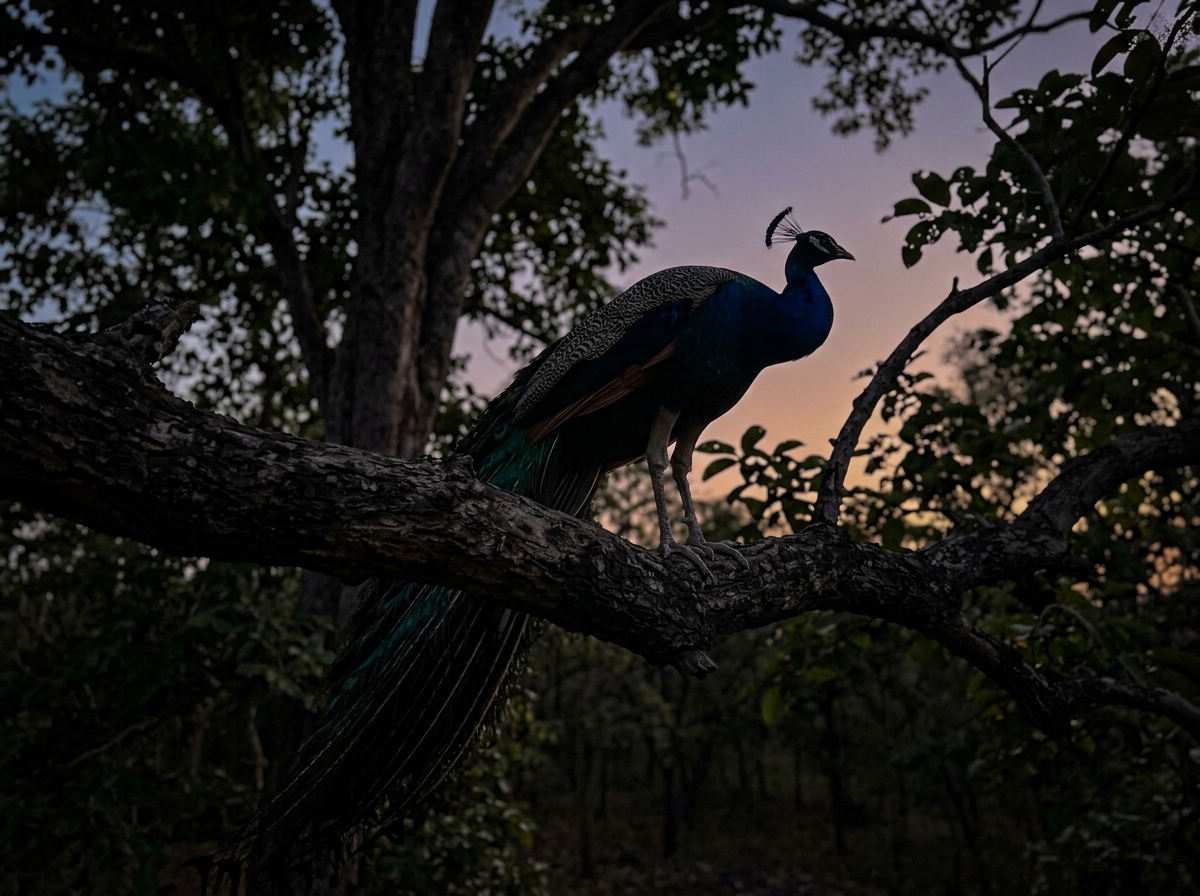
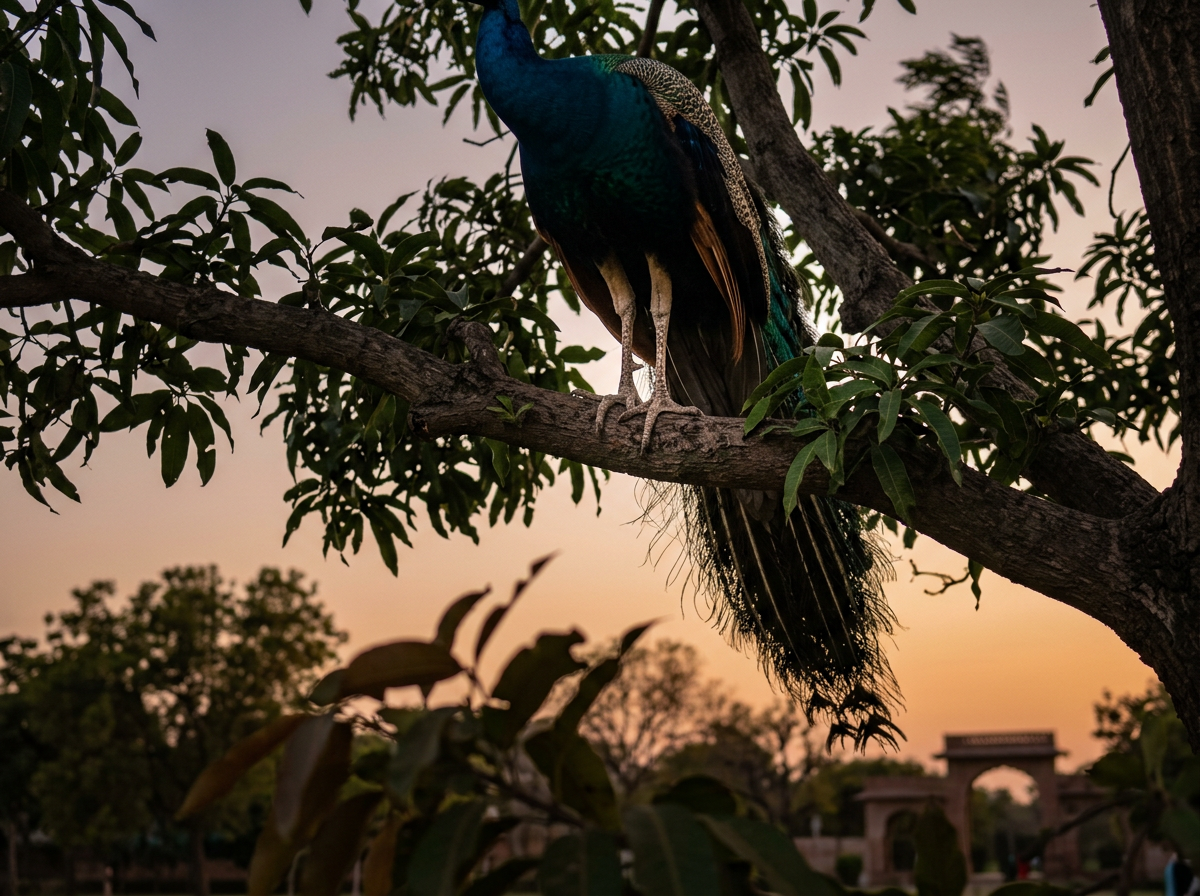
Peacocks are strong, committed tree roosters in the wild. At dusk, they fly up into the branches of tall trees, often choosing heights between 15 and 30 feet off the ground. They prefer trees with wide, stable horizontal branches where they can sit upright with their feet locked around the branch. In South Asia, where the peacock is a bird or not, you will regularly see groups of peafowl roosting communally in the same large trees night after night. This is not casual or occasional behavior. It is their default sleep strategy and has been consistent across documented observations.
The reason is simple: predator avoidance. Ground-sleeping would expose them to foxes, dogs, jackals, and big cats. Getting up 20 feet into a tree dramatically reduces that risk. Once up there, they tuck in, stay still, and their foot grip holds them in place through the night. This is functionally the same thing true perching birds do, even if the anatomy is slightly different.
Standing vs. perching: how to tell the difference when you are watching them
This is a useful distinction if you are observing peacocks in a yard, a zoo, or a wildlife setting. A peacock standing on the ground is using its feet flat for balance and support, the same way it walks. The toes are spread but not actively gripping anything. A peacock perching or roosting is doing something different: the toes are wrapped around a branch, beam, or rail, with the hallux pressing in from behind to complete the grip. The bird's body is typically upright or slightly forward-leaning, and its tail (or train) hangs down behind the branch rather than resting on a surface.
If you want to confirm true roosting behavior in the field, watch in the hour before dark. You will see peacocks become restless, vocalize, and then make short flights upward into trees. Once settled, they stop moving and stay on the same branch for the entire night. That is roosting. If a peacock is just sitting on a low fence rail or a rock during the day, that is resting, not the same committed overnight roost behavior that tells you about their natural instincts.
What affects where they choose to roost
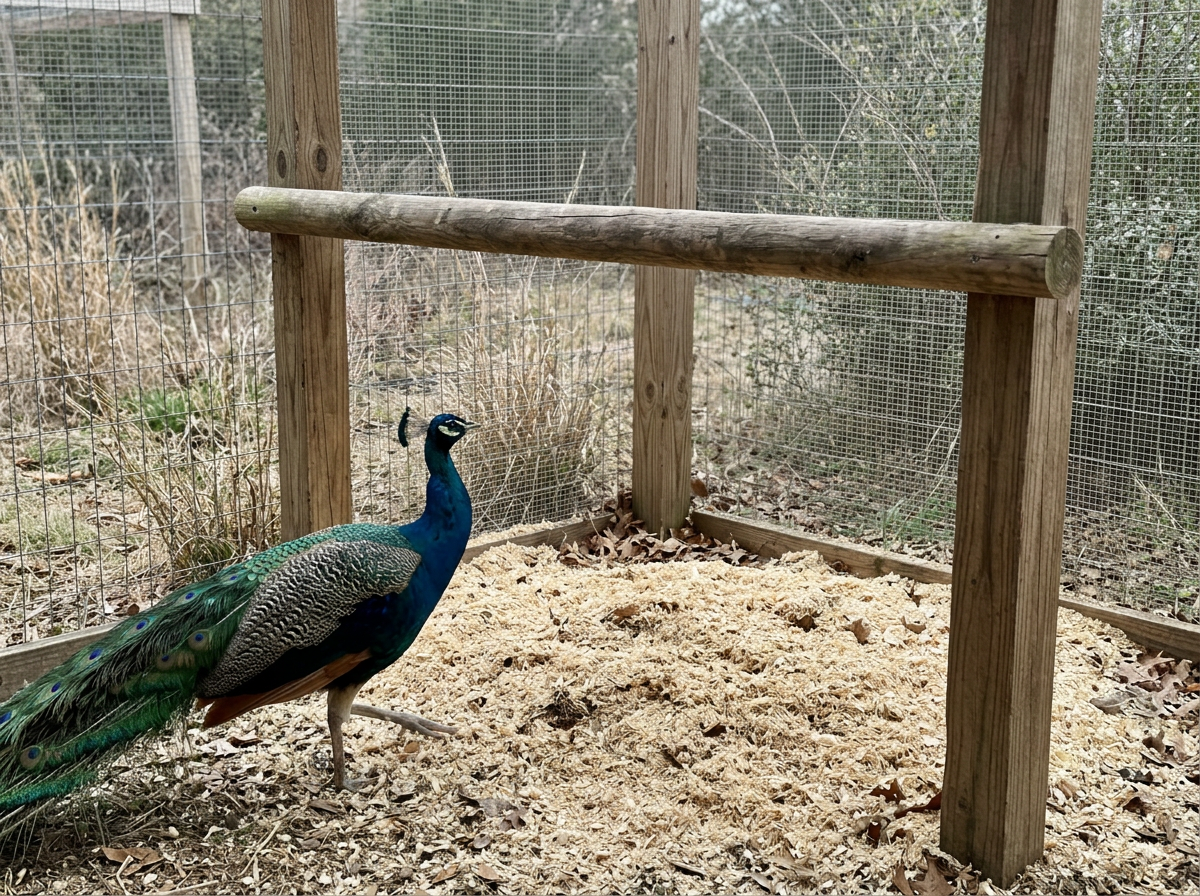
Peacocks are not random about their roost choices. Several factors push them toward one spot over another, and understanding these will help you predict their behavior or design a better enclosure.
- Height: They strongly prefer roosting at least 10 to 15 feet off the ground. Lower options get used only if nothing better is available.
- Branch or structure width: They need something wide enough to grip comfortably. Branches roughly 2 to 4 inches in diameter seem to be preferred. Too thin and they cannot balance their body weight; too wide and they cannot get their toes around it.
- Stability: They will not repeatedly use a branch or structure that sways significantly. Solid, stable roosts are chosen every time over flexible ones.
- Cover: Some overhead canopy or cover is preferred because it offers partial protection from rain and reduces visibility to aerial threats.
- Proximity to predators: If dogs or foxes regularly approach a roost tree, peacocks will abandon it and find an alternative. Consistent disturbance at roost time causes real stress.
- Familiarity: Once a peacock finds a roost it likes, it returns to the same spot night after night. Disrupting that routine takes time to reset.
Comparing peacocks to true perching birds
| Feature | Passerines (true perching birds) | Peacocks (Galliformes) |
|---|---|---|
| Biological order | Passeriformes | Galliformes |
| Toe arrangement | 3 forward, 1 backward hallux with locking tendon | 3 forward, 1 backward hallux, no automatic lock |
| Roosting in trees | Yes, standard behavior | Yes, consistent nightly behavior |
| Typical roost height | Variable, often 5 to 30+ feet | 15 to 30 feet preferred |
| Body weight on roost | Very light, tendon holds grip passively | Heavy (8-13 lbs), active grip required |
| Classified as "perching bird" | Yes, by definition | No, by classification |
| Ground nesting vs. roosting | Nests on ground or tree, roosts on branches | Nests on ground, roosts in trees |
The practical takeaway from this comparison: peacocks behave like perching birds in the sense that matters most for husbandry and observation, even though they are not in the same biological order. If you are keeping peafowl, you should treat their roosting needs as seriously as you would for any tree-roosting species.
Setting up roosts if you keep peacocks
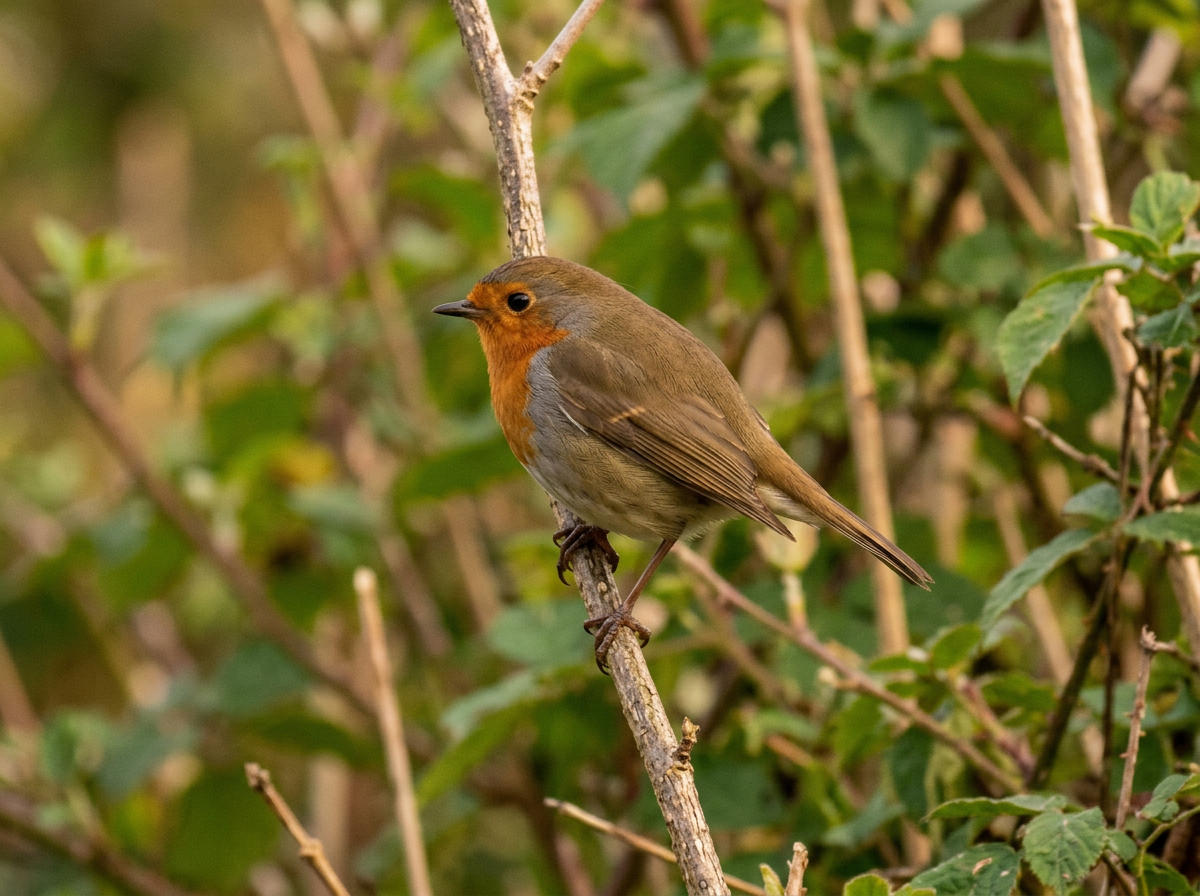
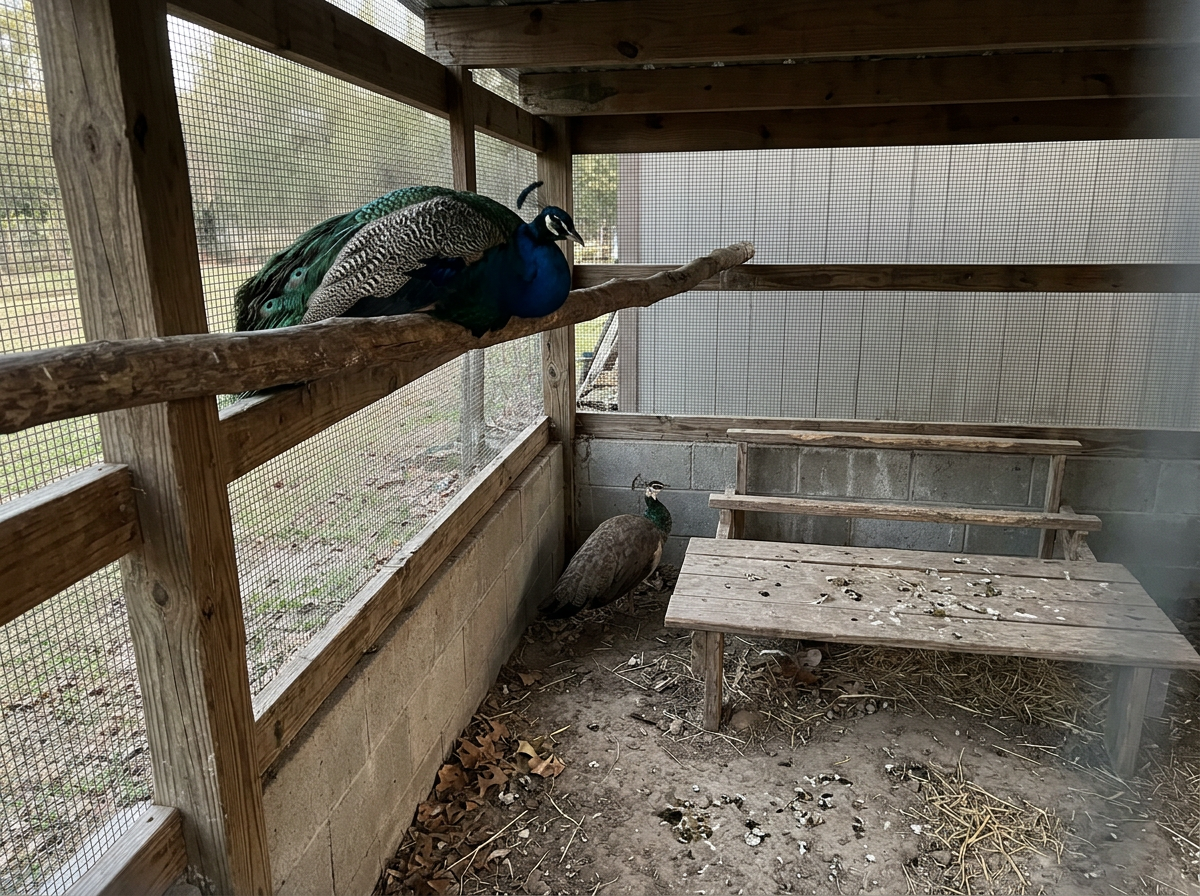
If you are keeping peafowl in an enclosure, providing proper roosting spots is not optional. Peacocks that cannot roost at height are stressed, more prone to health issues, and will attempt to escape to find elevated sleeping spots. Here is what actually works.
Height and structure
Build or install roosting bars at a minimum of 8 feet off the ground inside the enclosure, with 10 to 12 feet being better. Use solid lumber or thick natural branches, around 3 to 4 inches in diameter. Round or slightly oval cross-sections work better than square lumber because they are easier for the toes to grip. Make sure the structure is completely solid with no flex or wobble. A heavy peacock landing awkwardly on a shaky bar will quickly stop using it.
Spacing and layout
Allow at least 3 to 4 linear feet of roost bar per bird so they are not fighting for space. If you have a mixed group, dominant birds will claim the highest spots first. It helps to have two or three tiers at different heights so subordinate birds can still roost at an acceptable height rather than being forced to the ground. Space tiers at least 18 inches apart vertically so droppings from upper-level birds do not land on those below.
Safety and fall prevention
Peacocks can injure themselves if they fall from height in a confined space. Do not position roost bars directly above hard concrete or sharp objects. Put deep bedding, sand, or rubber matting below roost areas to cushion any accidental dismounts. Also avoid placing roosts near enclosure walls or mesh where a startled bird could hit the structure while trying to take off. Leave clear flight paths to and from the roost bars.
Outdoor access and natural options
If your peafowl have access to outdoor trees at night, they will often prefer a real tree over any man-made structure. This is fine as long as the trees are not near roads, the property is secure, and you are comfortable with free-ranging overnight. Many keepers clip the flight feathers on one wing to limit roost height and reduce escape risk, which you can do at around 12 to 15 inches of feather length. Just know that a clipped bird is more vulnerable to ground predators at night, so that tradeoff requires a secure enclosure or very safe property.
The direct answer, summed up
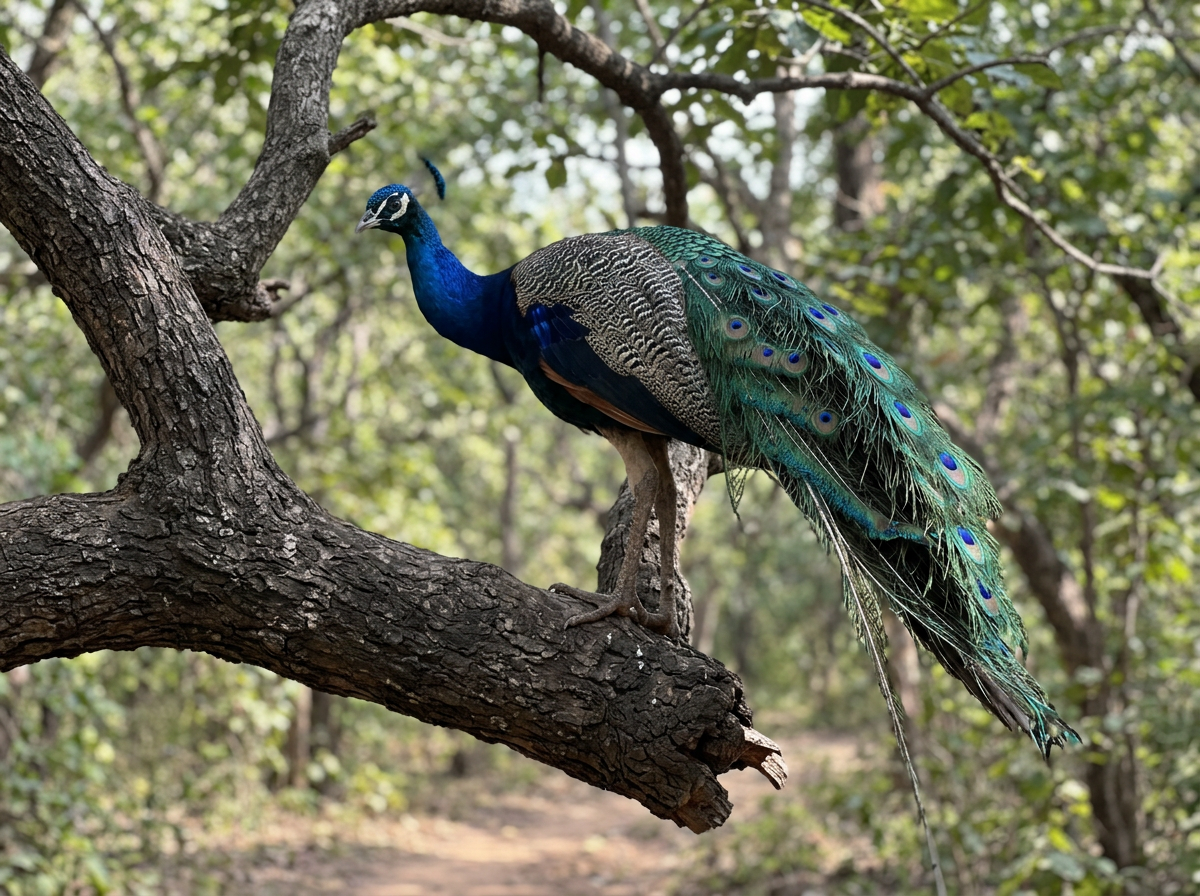
Peacocks are not perching birds in the taxonomic sense. They belong to Galliformes, not Passeriformes, and they do not have the automatic toe-locking tendon that defines true passerine perching. But they absolutely perch and roost in trees by instinct every single night, gripping branches with their feet just like a perching bird would. If you are observing peafowl, you can confirm roosting behavior by watching their evening flight up into trees or enclosure bars. If you are keeping peafowl, build solid roost structures at 8 to 12 feet with 3 to 4 inch diameter bars, space them properly, and keep the landing zones below them safe. Get that right and your birds will be calmer, healthier, and doing exactly what their biology expects them to do.
FAQ
Can a peacock “perch” on a fence or wire the way a songbird does?
Yes, but typically only as a nocturnal roost and on sturdy supports. Daytime “perching” on a fence rail, log, or rock is usually resting, not the stable overnight grip posture that shows they are using that spot for sleep. A quick tell is whether they fly up near dusk and then stay put through the night.
What kind of perch material is safest for peacocks in an enclosure?
Peacocks generally grip well on thick, stable surfaces, but thin or flexible perches (small diameter metal, wobbly stands, or shaded branches that sway) are less reliable. If the bird can’t land firmly without the perch flexing, it may avoid it and choose an alternative spot even if the height seems correct.
Do peacocks have the same toe-locking mechanism as true perching birds?
Not exactly, and this is an important difference for interpretation. True perching birds have a specialized locking mechanism that helps them stay on very thin substrates for long periods. Peacocks can hold firmly, but they rely more on grip strength and the stability of the surface, so you should not assume they will handle very small-diameter or shaky perches like passerines.
What happens if my peafowl cannot roost at the recommended height?
It can, and it’s a common reason keepers see stress or injuries. If a peacock cannot reach adequate height at night, it may attempt repeated escape flights or choose unsafe sleeping spots (low roofs, walls, or near sharp edges). In practice, “good enough height” is usually at least 8 feet, with 10 to 12 feet often working better for calmer overnight behavior.
How can I tell roosting from just resting when I’m observing peacocks?
Watch the full sequence near dusk. Roosting is usually preceded by increased restlessness and vocalizing, then a short upward flight into the chosen branches or bars, followed by minimal movement once settled. If the bird hops down shortly after settling, it’s more likely experimenting or resting rather than committing to overnight roosting.
Do peacocks fight over the best roost spots, and how do I prevent that?
Yes, and it affects which birds use which perches. Dominant individuals tend to claim the highest spots first, and without enough linear space or multiple tiers, subordinates may be pushed down closer to the ground. Providing several tiers and spacing per bird helps reduce bullying and lowers the chance of ground-sleeping.
How do I manage droppings when I install multiple roost levels for peacocks?
To reduce droppings and contamination problems, use vertical spacing between tiers and place roosts so birds above are not directly over birds below. The article’s guidance of spacing tiers at least 18 inches apart vertically is the practical rule to help keep lower-roost areas cleaner and reduce irritation from falling waste.
If I clip one wing, will my peacock still roost like a normal tree-rooster?
A clipped wing can lower how high a peacock chooses to roost, which may make your enclosure plan easier, but it also changes escape behavior. Keepers often need to compensate with secure roost access and a safer ground area because clipped birds are less able to “recover” from a bad landing at night.
If there are outdoor trees, should I still install roost bars inside the enclosure?
Yes, and it’s a practical edge case. Peacocks will sometimes roost in nearby trees if those trees are truly accessible and stable, but the risk is security and safety, not the roosting behavior itself. Even with a natural tree, you should ensure it is not near roads or hazardous obstacles, and that the property barrier prevents nighttime wandering.
Next Article
Are Penguins Birds? Quick Yes, Traits, and Water Bird Info
Yes, penguins are birds. Learn key bird traits and why they count as water birds in simple terms.