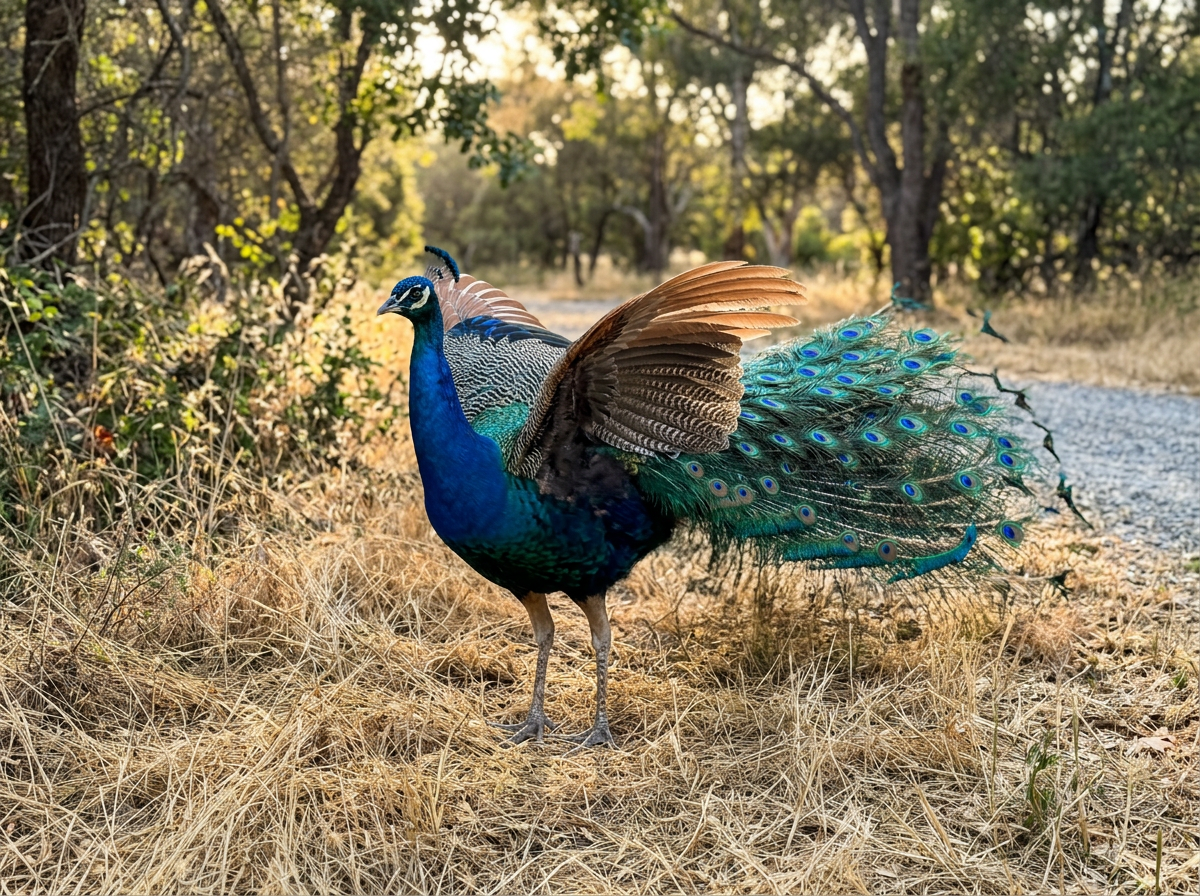
Quick direct answer: yes, a peacock is absolutely a bird
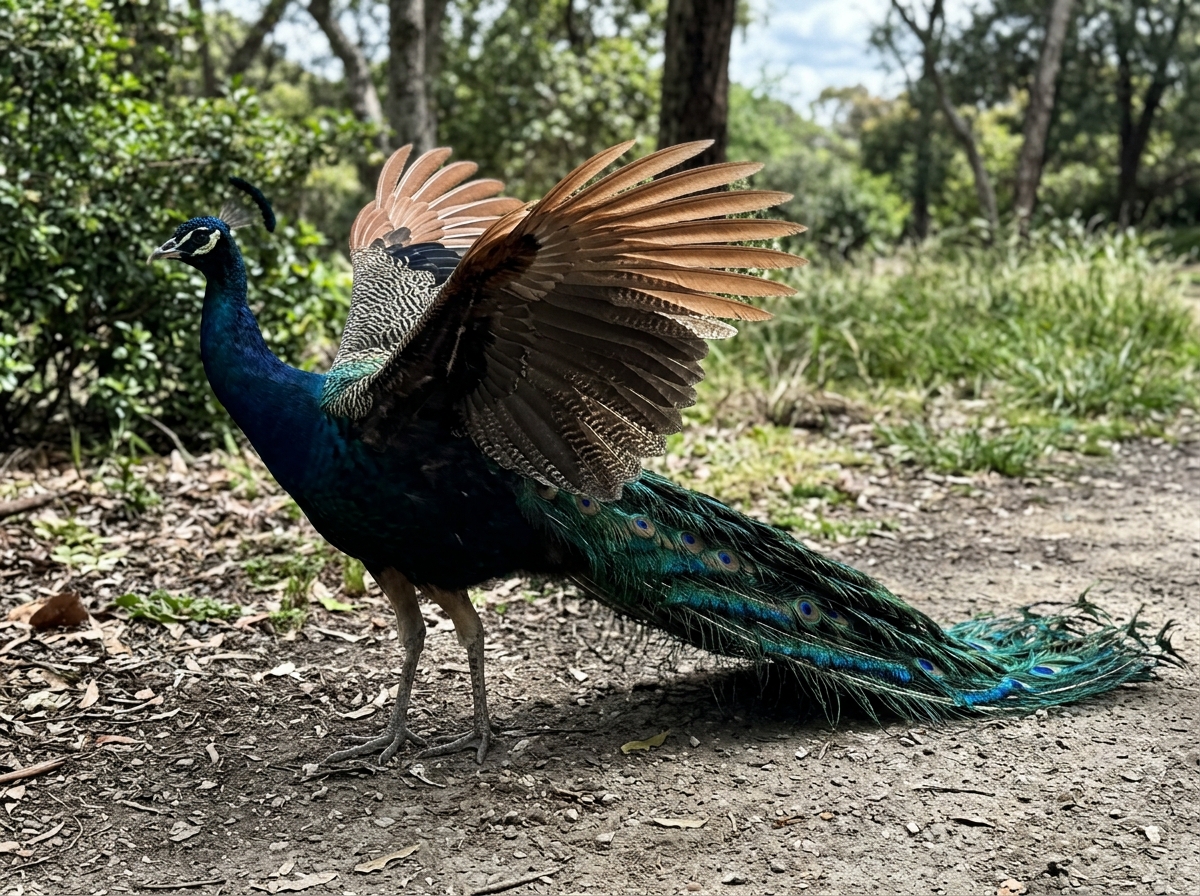
A peacock is a bird, full stop. Specifically, it belongs to Class Aves (the biological class that contains all birds) and carries the scientific name Pavo cristatus. The U.S. Fish and Wildlife Service and CITES both list it under Class Aves, Family Phasianidae, which is the same family that includes pheasants, turkeys, and chickens. So when someone asks "peacock is a bird or not," the answer is not even close to ambiguous. It is a bird in every scientific and practical sense of the word.
The confusion tends to come from two places. First, people see that enormous, trailing display train and assume something that looks so theatrical and impractical must be outside the normal rules of birdhood. Second, people hear that peacocks don't migrate or fly long distances, and they mentally file them alongside ostriches and emus as "flightless." Neither of those assumptions holds up, and that's exactly what this guide untangles.
One more quick clarification worth making here: "peacock" technically refers to the male. The female is a peahen, and together they're called peafowl. In everyday conversation, though, most people use "peacock" for the whole species, and that's fine for our purposes.
Is a peacock flightless? the confusion explained
Here's where most of the misunderstanding lives. "Flightless" is a specific biological term. Collins defines a flightless bird as one that is unable to fly because it does not have the necessary type of wings. Think ostriches, kiwis, or penguins: birds that have lost the anatomical machinery for powered flight over millions of years of evolution. They have reduced or absent keels (the breastbone ridge where flight muscles attach), shortened or modified wings, and no realistic path back to the air.
Peacocks are not in that category. They have fully functional wings, a proper keel, and working flight muscles. They are capable of powered flight. The reason people casually call them flightless is that peacocks don't use flight the way a robin or a swallow does. They don't migrate. They don't cover long distances on the wing. They're big, heavy birds that prefer to walk. But preferring not to fly and being unable to fly are completely different things, and that distinction matters.
A useful comparison: the green peafowl (Pavo muticus), a close relative of the Indian peafowl, is actually observed on the wing fairly often and is described as capable of sustained, if energy-intensive, flight. That alone shows that "peafowl" as a group doesn't fit neatly into the flightless category. The Indian peacock simply leans much harder toward terrestrial life by habit.
Can peacocks fly at all? what 'flying bird' really means
Yes, peacocks can fly. Not far, not for long, but they can and do get airborne under their own power. The Indian peafowl is explicitly described in ornithological sources as capable of flight despite its size. That size is the real limiting factor: a mature male peacock, display train included, is one of the largest flying birds in the world by weight.
The train (those long, iridescent tail covert feathers) is often blamed for grounding peacocks, but peer-reviewed research published in Scientific Reports found that the peacock's train does not actually handicap its ground locomotor performance. Separately, studies on the train's physical structure show it functions as an ornamental display feature rather than a flight constraint in the way that, say, an ostrich's vestigial wings constrain an ostrich. The train is heavy and cumbersome, but it doesn't make the bird flightless.
So what does "flying bird" mean for a peacock? It means a bird that retains the anatomy and ability for powered flight and uses it when needed, even if it's not a routine long-distance traveler. By that definition, peacocks qualify. They are not sustained, migratory fliers, but they are not grounded either.
How peacocks actually move day to day
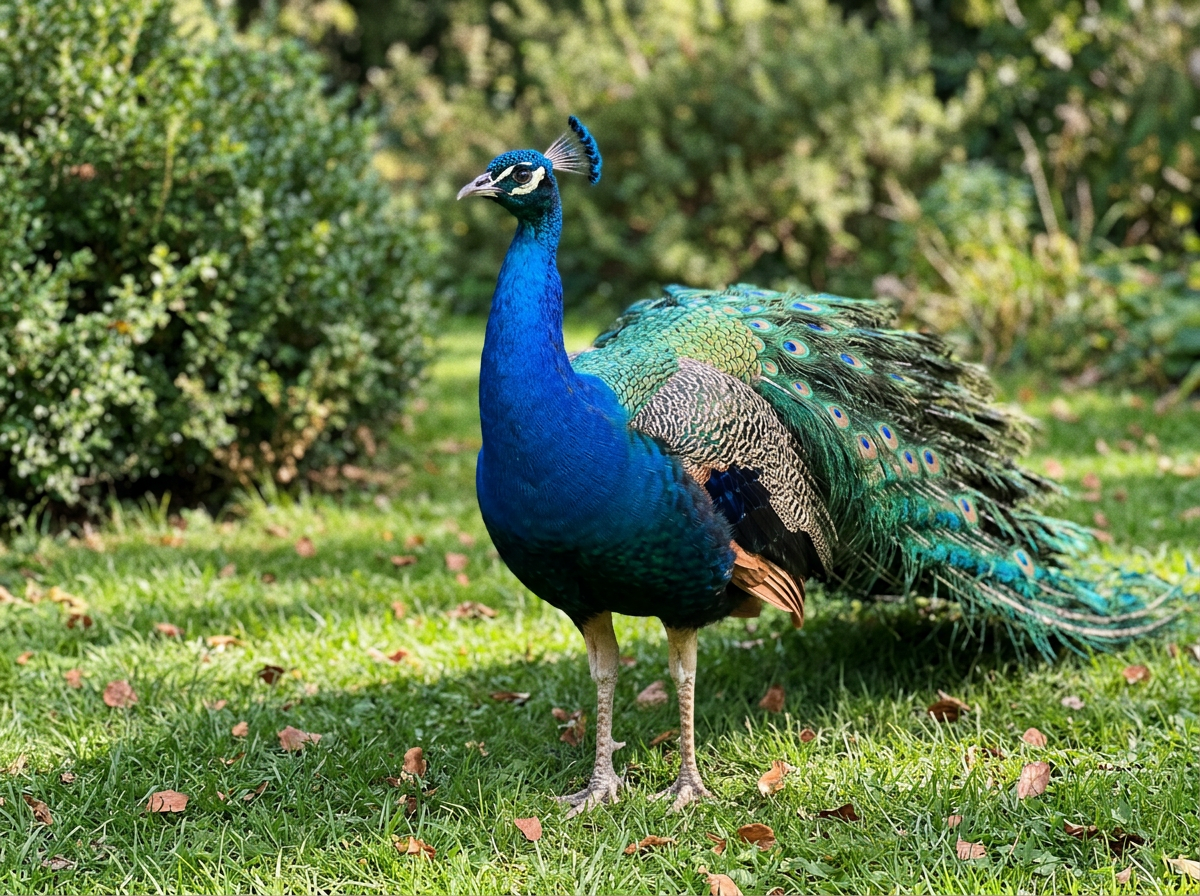
The primary mode of travel for a peacock is walking. Research on the metabolic cost of locomotion in Pavo cristatus treats them as capable terrestrial walkers, and that's an accurate picture of their daily life. In the wild, they cover large amounts of ground on foot, foraging across grasslands, forests, and farmland edges. They can run quickly when threatened, which is usually their first response to danger rather than taking flight.
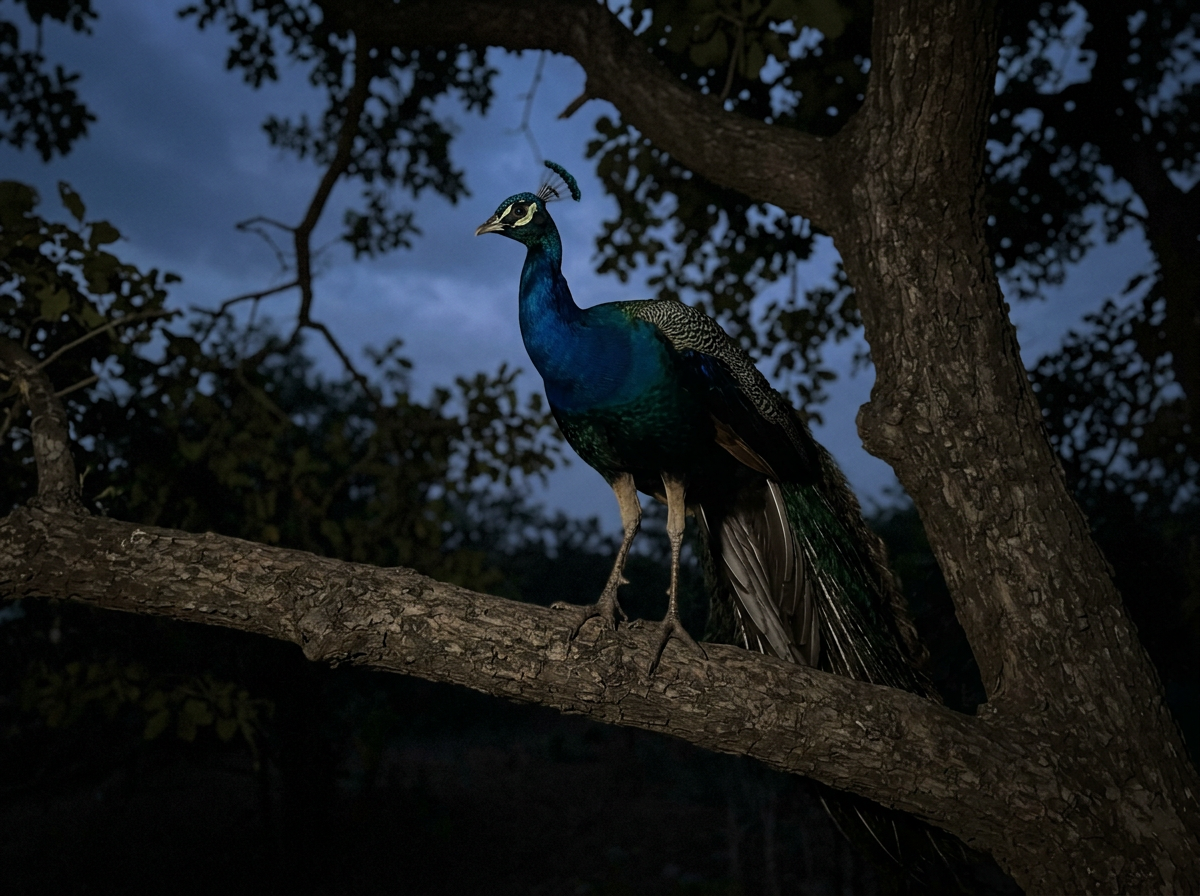
Flight shows up in specific, practical situations. Roosting is the big one. Every night, peafowl fly up into trees to sleep, which keeps them safe from ground predators. Research in Gir forest documented roosting heights of 16 to 22 meters, and a separate study on Javan green peafowl described birds either flying directly to the roost tree or staging the ascent by flying to lower trees first, then making it to the top. That's not trivial flight: getting 16 to 22 meters off the ground requires real, powered wingbeats.
They also use flight to escape predators, bursting upward into trees or structures when a ground-level threat appears. The typical pattern observed in the field is a few hard wingbeats to gain height, followed by a glide. It's functional and purposeful, just not built for covering miles. Wildlife educators and zoo fact sheets consistently describe the same pattern: peafowl generally run first, fly short distances when necessary, and roost in trees every night.
Walking, running, and short hops vs sustained flight: a quick comparison
| Behavior | Does a peacock do it? | Notes |
|---|
| Walking/foraging on foot | Yes, routinely | Primary daily movement mode |
| Running to escape danger | Yes, first response | Fast ground speed for a bird this size |
| Short powered flight bursts | Yes, regularly | Used for roosting and predator escape |
| Flying up to roost (16–22 m) | Yes, every night | Documented in wild populations |
| Sustained long-distance flight | No | Not migratory; not built for cross-country travel |
| Migration | No | Non-migratory species |
Real-world signs and facts that confirm what you're looking at
If you're watching a peacock and want to confirm it's definitively a bird (and understand what type of bird you're dealing with), here are the concrete things to look for and remember.
- Feathers: every bird has them, and peacocks are covered in them, including the iridescent display feathers on the train. No mammal or reptile has feathers. If you see feathers, you're looking at a bird.
- Wing structure: a peacock's wings are fully formed and functional. Compare this to an ostrich, whose wings are small and incapable of lift. A peacock can spread its wings to full span and generate powered flight.
- Roosting at height: if you see the bird flying up into a tree to sleep at dusk, that's a peacock behaving exactly as the research documents. Truly flightless birds cannot do this.
- Running before flying: peafowl almost always try to run first when startled. If they do take off, watch for the burst-and-glide pattern: hard wingbeats to get airborne, then a glide to a perch or tree.
- Scientific classification: Pavo cristatus, Class Aves. That's the same class as every other bird on Earth, from hummingbirds to eagles. Taxonomy is the most reliable confirmation you can get.
- Size context: a male peacock can weigh around 4 to 6 kilograms. That's heavy for a flying bird, which is exactly why flight is limited in duration and distance. Weight explains the behavior without changing the classification.
One thing worth keeping in mind: people sometimes confuse this topic with related questions, like whether a bird of paradise or a bird of prey. It's neither. It's a galliform bird (order Galliformes), which puts it firmly in the chicken-and-pheasant family rather than the raptor or tropical-flower-bird categories. Those are separate groups with their own characteristics.
The bottom line on peacocks, birds, and flight
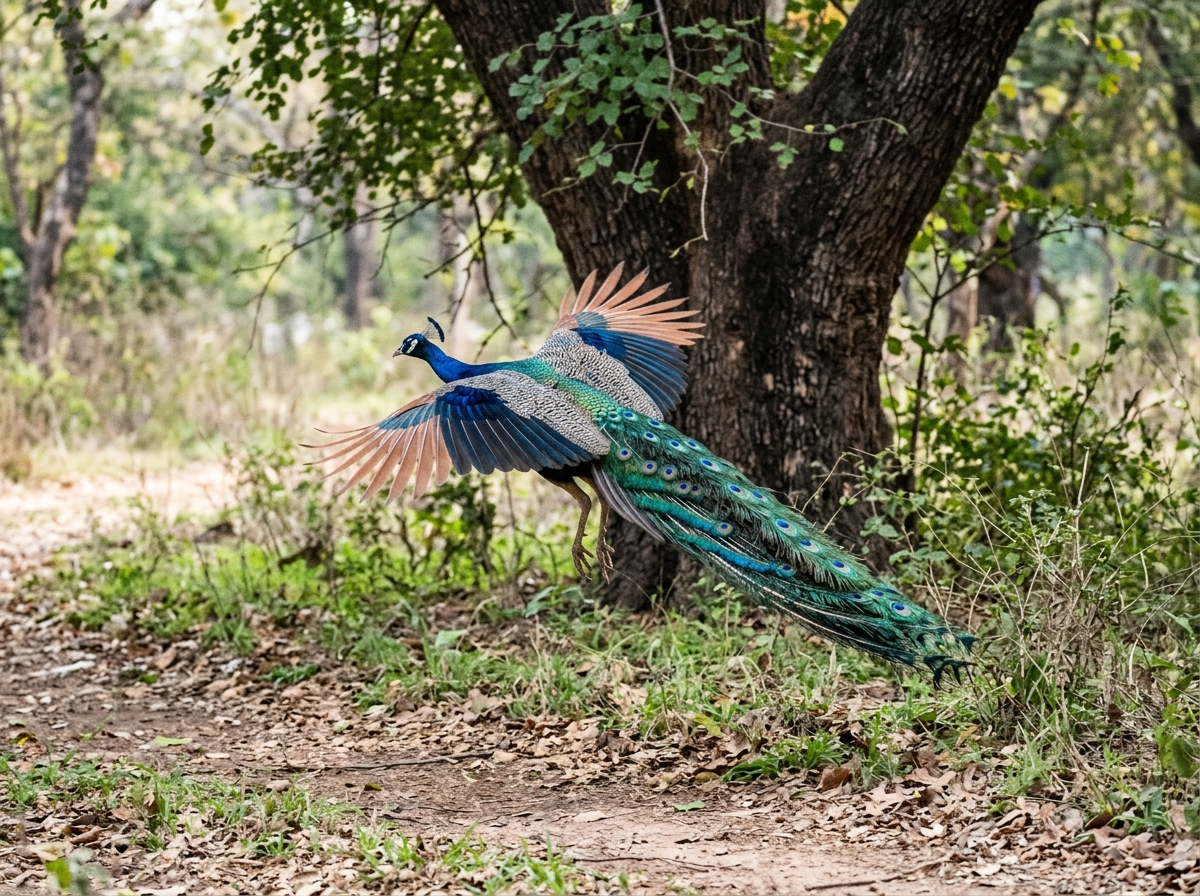
A peacock is a bird. It is classified under Class Aves (Pavo cristatus), it has feathers, it lays eggs, and it can fly. It is not flightless in the biological sense because it has working wings and uses them every day to roost in trees at heights of up to 22 meters. What it is not is a long-distance or migratory flier. It walks most of the time, runs when threatened, and uses short powered bursts of flight for safety and roosting. That combination gets misread as "flightlessness," but the correct term is limited or short-range flier.
If someone tells you peacocks are flightless, you now have everything you need to explain why that's not quite right. The bird is real, the flight is real, and the classification has never been in question.