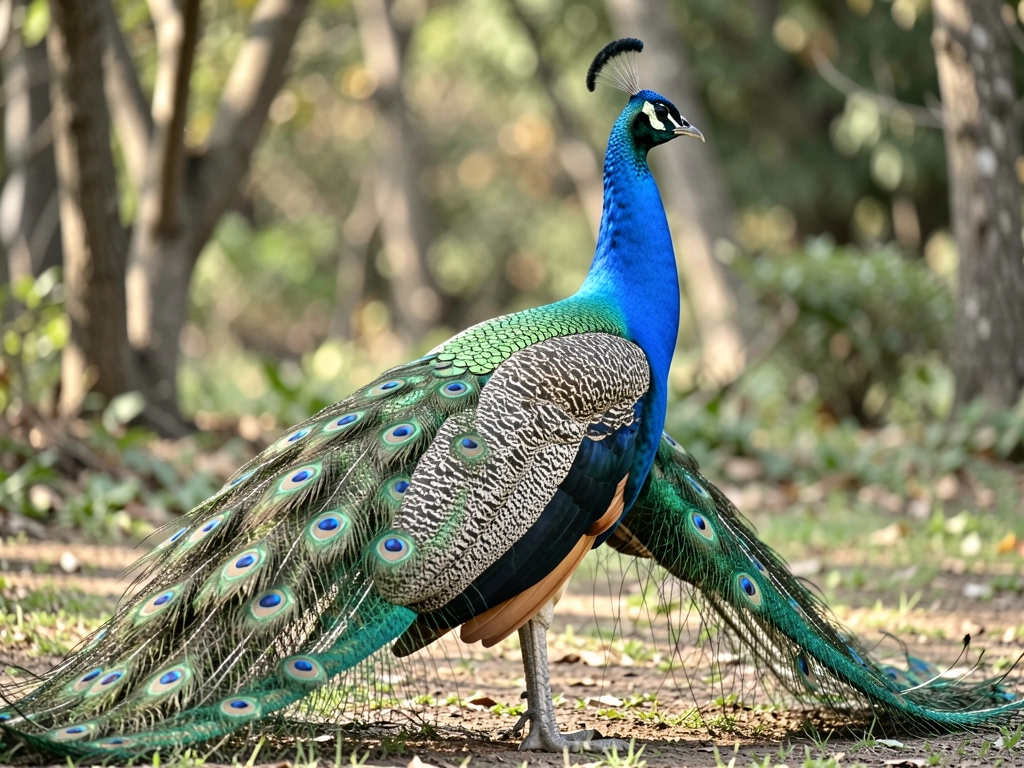
No, a peacock is not a bird of prey. It does not hunt animals for food using specialized killing adaptations, it does not have a hooked beak for tearing flesh, and it does not have talons for grasping and killing prey. Peacocks are large, omnivorous ground birds that eat mostly plants, insects, and small reptiles. They are about as far from a raptor as a chicken or a pheasant, which makes sense because they are closely related to both.
Is a Peacock a Bird of Prey? What Peacocks Really Are

Sarah Chen
22 Mar 2026
What "bird of prey" actually means
The term "bird of prey" refers to any bird that actively pursues other animals for food, relying on specific physical adaptations to catch and kill them. Britannica defines the category broadly as birds that hunt other animals, and the word "raptor" is often used as a synonym, though it is worth knowing that the terminology is not perfectly standardized. A commentary published in the Journal of Raptor Research points out that there is no single universal definition agreed upon across all scientific literature. In practice, though, most ornithologists and ecologists use the same core criteria: a hooked beak for tearing flesh and taloned feet for piercing, grasping, and killing prey.
Under U.S. federal law, raptors are specifically named as eagles, falcons, owls, hawks, and similar birds of prey. Think of a bald eagle gripping a fish, a peregrine falcon diving at 240 mph, or a great horned owl snatching a rabbit in the dark. Those are the animals the "bird of prey" label is built around. A peacock does not belong in that list by any reasonable measure.
What peacocks actually eat and how they live
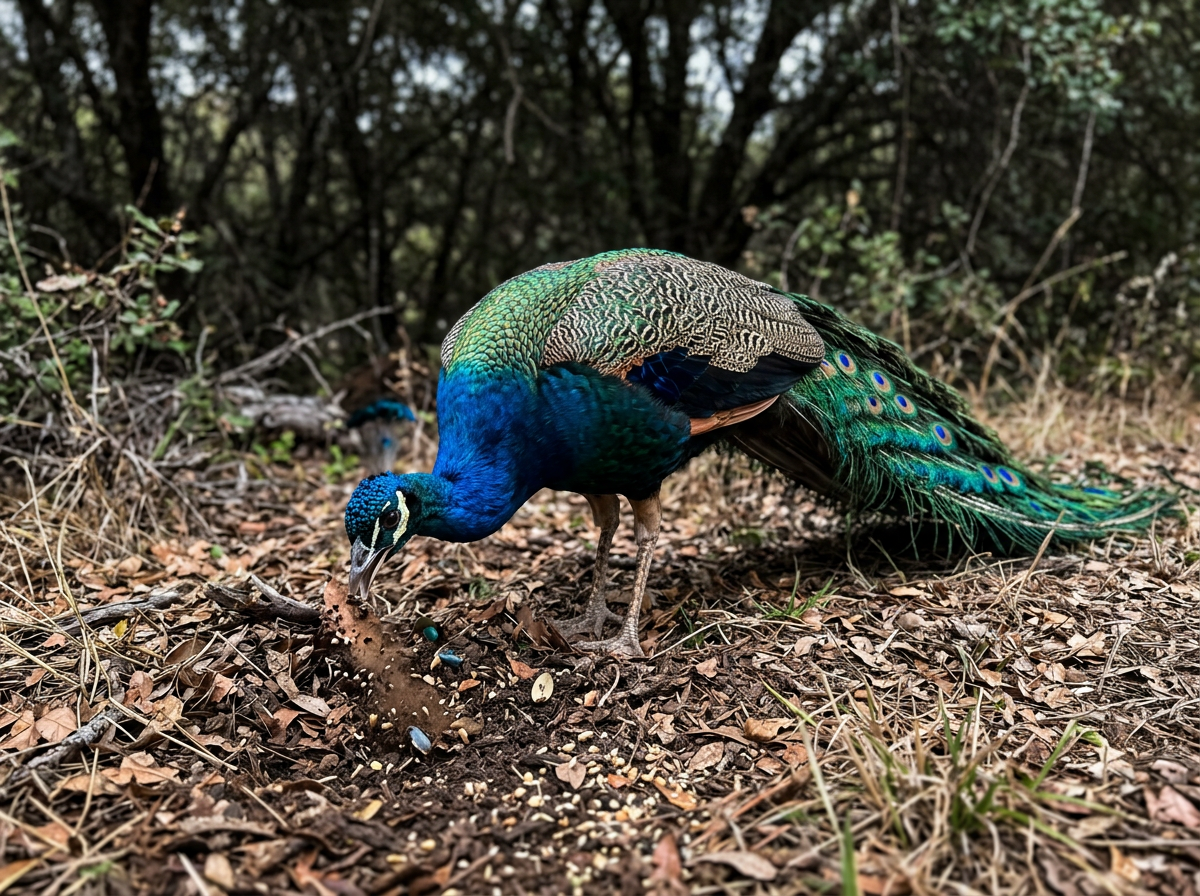
Peacocks (the males of the species; the correct umbrella term for the species is peacock is a bird or mammal) are native to South Asia and Southeast Asia. They are ground-foraging birds that spend most of their day walking through forests, grasslands, and farmland picking at whatever they find underfoot. Their diet is opportunistic and broad: seeds, berries, grain, insects, small lizards, frogs, and occasionally small snakes. That last part, the snakes and lizards, is probably one reason some people assume they might be predators. But eating a small lizard while foraging is very different from actively hunting, pursuing, and killing prey the way a hawk or falcon does.
Peafowl roost in trees at night for safety, but they do not hunt from above. They are social birds, often living in loose groups called parties or musters. They are loud, conspicuous, and frankly not built for stealth. A bird of prey depends on either speed, silence, or surprise to catch prey. A peacock, dragging a five-foot tail behind it and screaming across the landscape, is none of those things.
Where peacocks fit in bird classification
Biologically, peafowl belong to the order Galliformes and the family Phasianidae. If those names sound familiar, it is because chickens, turkeys, quail, and pheasants are in the same family. Within Phasianidae, the Indian peafowl (Pavo cristatus) and the green peafowl (Pavo muticus) are the two most recognized species. Like their relatives, peafowl are heavy-bodied, ground-dwelling birds with rounded wings that are better suited for short bursts of flight than sustained aerial hunting.
True birds of prey sit in entirely different orders. Eagles, hawks, kites, and vultures belong to Accipitriformes. Falcons are in Falconiformes. Owls are in Strigiformes. These groups share convergent hunting adaptations but are not even closely related to each other, let alone to peafowl. Placing a peacock alongside a red-tailed hawk in any classification system makes no biological sense.
The physical traits that separate raptors from peacocks
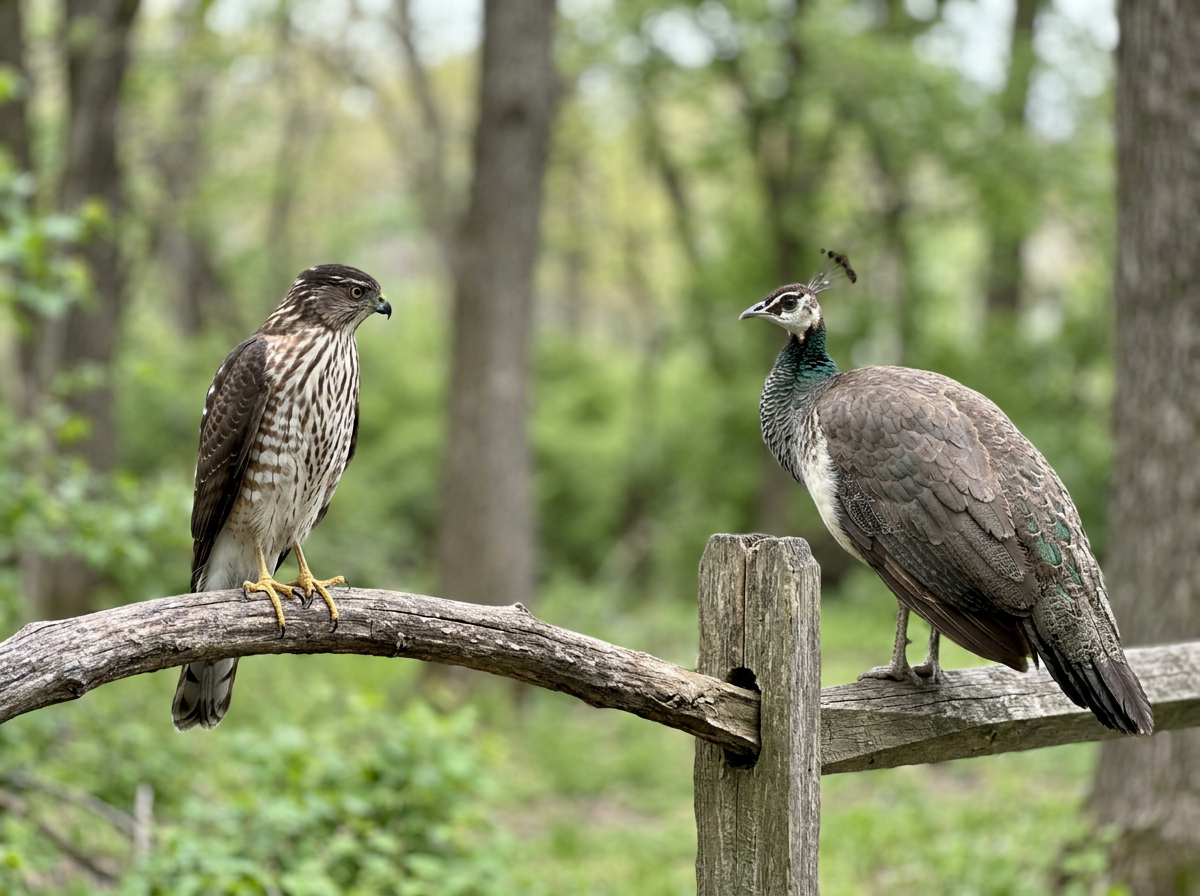
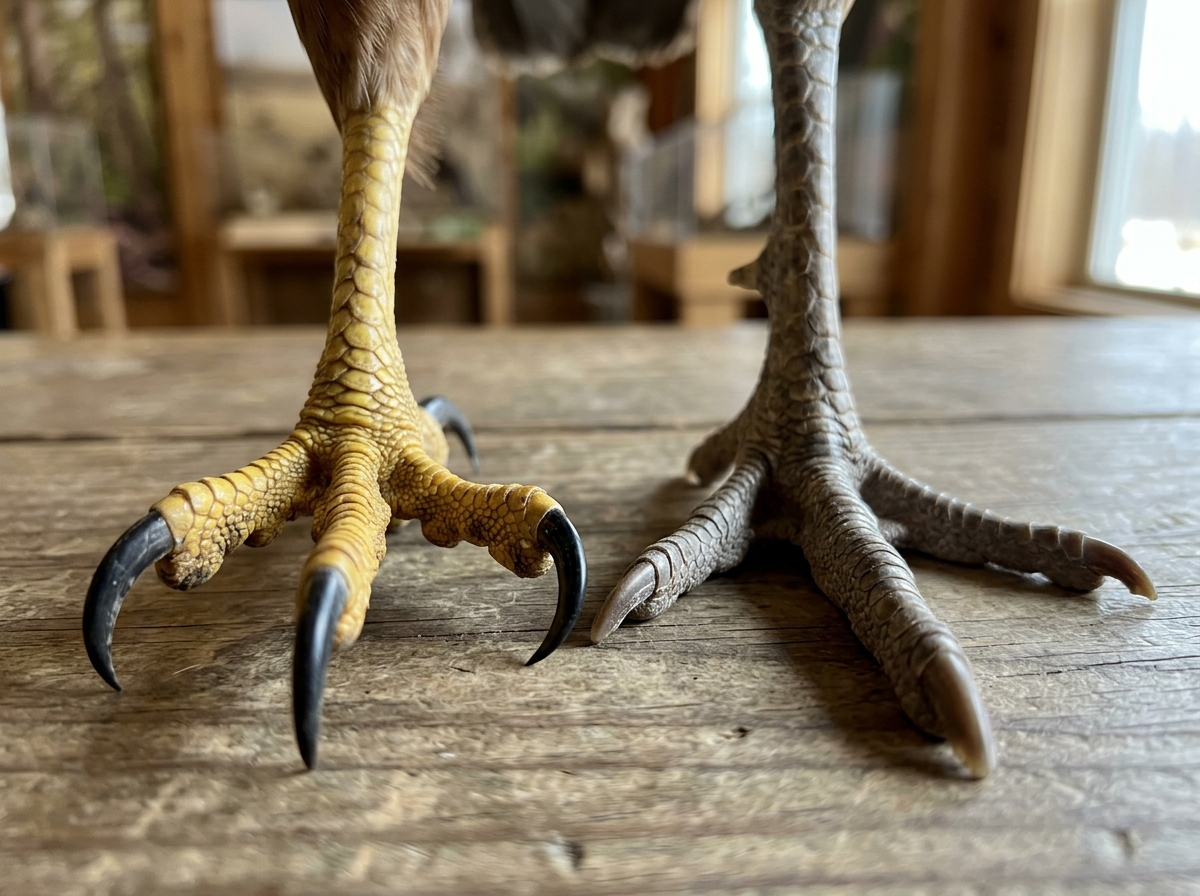
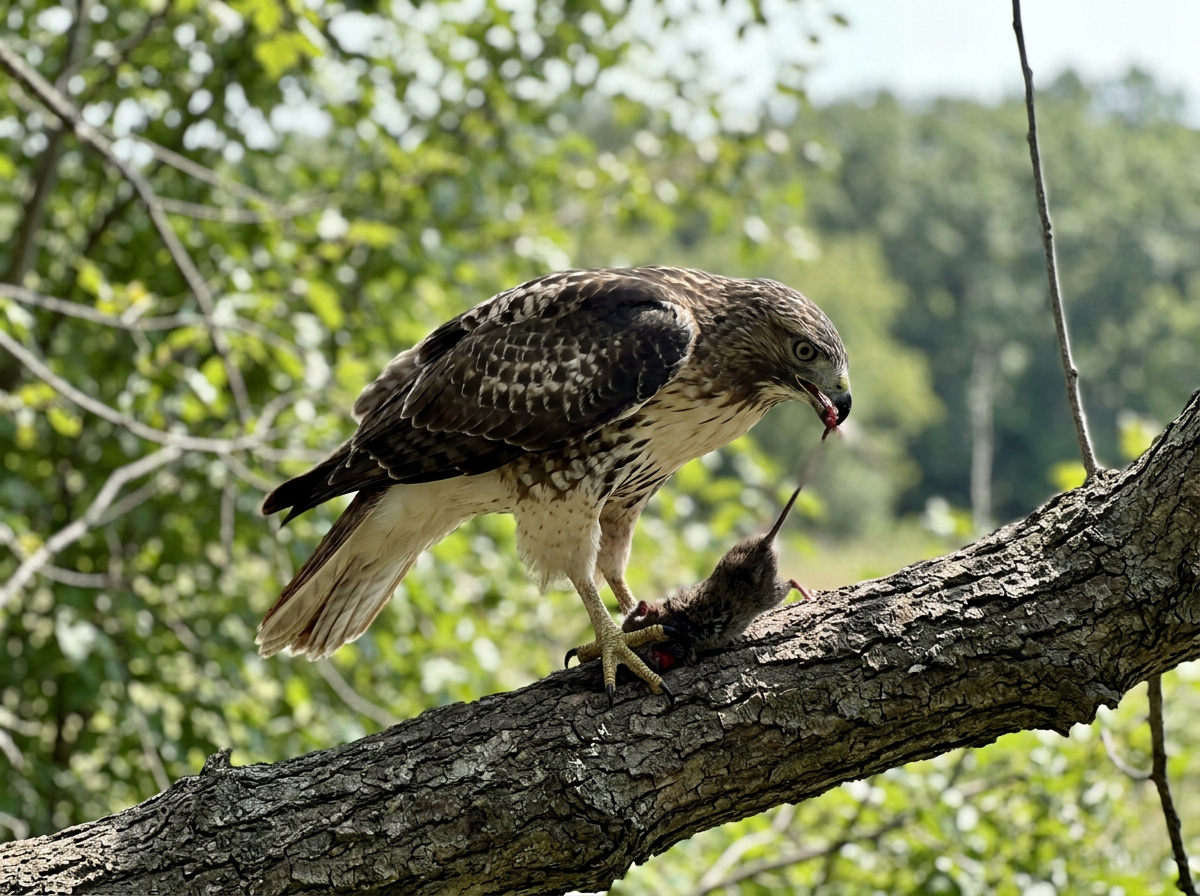
This is where the distinction is easiest to see. Birds of prey are defined by two anatomical hallmarks: a strongly hooked beak and taloned feet. The hooked beak allows them to tear through flesh, skin, and bone. The talons, which are elongated, curved, and extremely powerful claws, are the primary weapon for grasping and killing prey. A peregrine falcon's foot can exert grip forces strong enough to stun or kill a bird mid-air. A golden eagle's talons can pierce the skull of a jackrabbit.
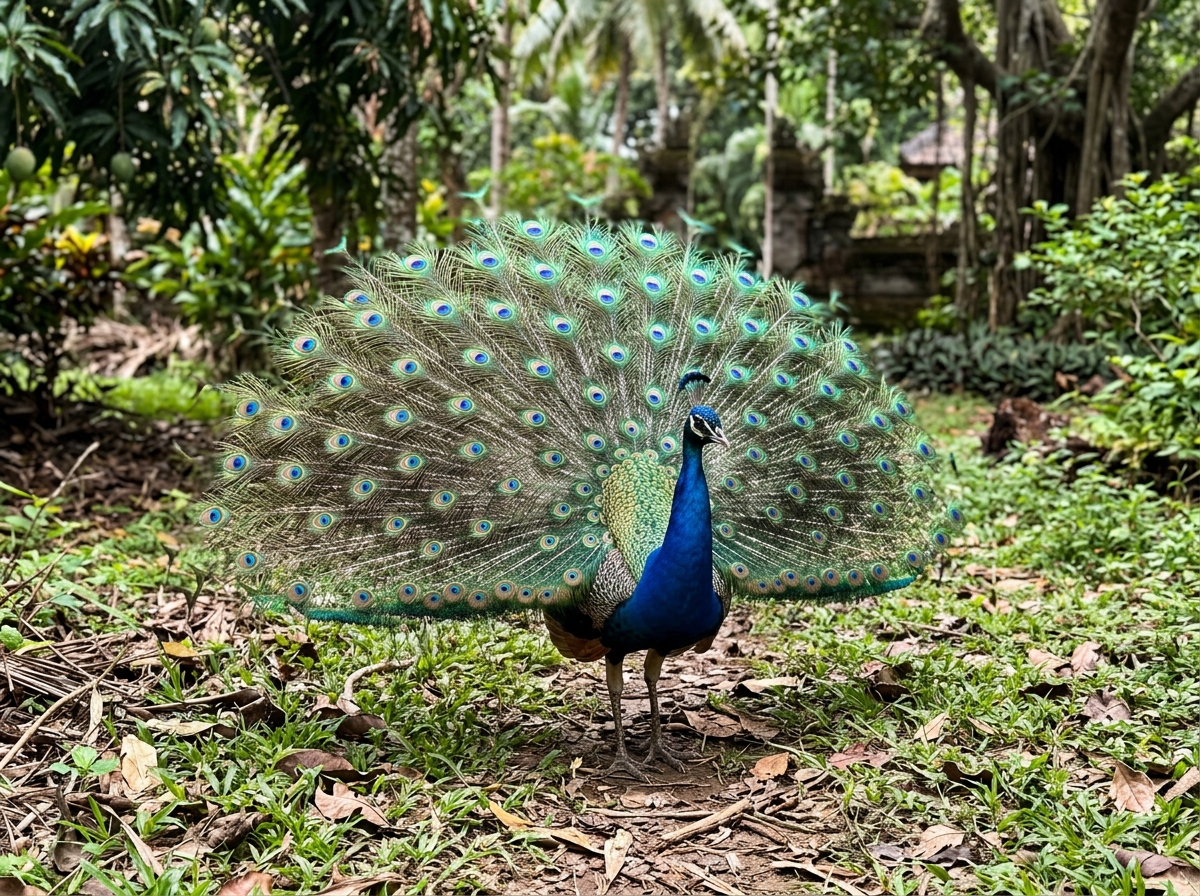
Now look at a peacock. Its beak is straight and relatively short, designed for pecking at grain, insects, and plant matter. It is not hooked, and it is not built for tearing flesh. Its feet have short, blunt claws used for scratching at the ground while foraging, similar to a chicken's feet. There are no elongated killing talons. A peacock does not have the physical tools to be a bird of prey, full stop.
| Trait | True Bird of Prey (e.g., Eagle, Falcon) | Peacock (Peafowl) |
|---|---|---|
| Beak shape | Strongly hooked for tearing flesh | Straight, short, for pecking |
| Feet/claws | Long curved talons for grasping and killing | Short blunt claws for scratching |
| Diet | Primarily meat: mammals, birds, fish, reptiles | Omnivore: seeds, insects, small reptiles, berries |
| Hunting behavior | Active pursuit, aerial or ground ambush | Ground foraging, opportunistic |
| Classification (order) | Accipitriformes, Falconiformes, or Strigiformes | Galliformes |
| Body build | Compact, aerodynamic, built for speed or power | Heavy-bodied, large tail, built for display |
| Flight style | Sustained, controlled, hunting-capable | Short bursts, mostly ground-dwelling |
Do peacocks hunt like raptors? Not even close
Raptor hunting behavior is highly specialized. Hawks use a perch-and-dive strategy. Falcons reach incredible speeds in a stoop (a controlled dive). Owls use silent flight and exceptional night vision to ambush prey in darkness. All of these behaviors require specific physical and neurological adaptations: forward-facing eyes for depth perception, acute vision tuned to detect movement, and wings shaped for controlled pursuit.
Peacocks have eyes on the sides of their head, which is characteristic of prey animals, not predators. Side-facing eyes give a wide field of view for detecting threats approaching from behind, not for judging the distance of a fast-moving target. When a peacock encounters something edible, it walks over and pecks at it. That is foraging, not hunting. The only situation where a peacock might be described as "attacking" is in self-defense, particularly males during breeding season who will charge at perceived threats. But aggressive self-defense is not predation.
Why people sometimes think peacocks are predators
A few things genuinely confuse people here, and the confusion is understandable. First, peacocks are large. An adult Indian peacock can reach nearly 8 feet from beak to tail tip and weigh up to 13 pounds. Size alone reads as threatening to a lot of observers. Second, they do eat small animals. Seeing a peacock catch and swallow a lizard can look alarming if you were expecting it to peck at seeds. Third, the male's display, with its fanned tail and loud calls, can feel intimidating in person. Some people also associate the word "peafowl" or "peacock" with power or royalty, which carries predator-adjacent connotations.
There is also a folkloric tradition in parts of South Asia and medieval Europe that peacocks were immune to snake venom or that they actively hunted and killed snakes. There is a kernel of truth in that peacocks will eat small snakes opportunistically, and they are more alert to snake movement than many other birds. Some villages in rural India historically kept peafowl partly because they alarm-called at the presence of snakes. But alarm-calling and occasionally eating a small snake is nothing like the systematic predatory behavior of a raptor. The legend grew larger than the reality.
It is also worth briefly noting that peacocks are sometimes confused with birds of paradise (a completely different family of birds from New Guinea) due to their spectacular plumage. Neither group has anything to do with raptors, but the name mix-up occasionally sends people down the wrong research path.
How to tell peafowl from birds of prey in the field
If you spot an unfamiliar large bird and want to figure out quickly whether it is a raptor or something else, run through this checklist. You do not need binoculars or a field guide to answer most of these questions.
- Check the beak: Is it strongly hooked downward at the tip? If yes, possible raptor. If it is straight or slightly curved, look elsewhere.
- Check the feet: Can you see long, curved, prominent talons? Raptors have them. Peafowl, chickens, and pheasants have short, stubby claws.
- Check the size and body shape: Peacocks are enormous and trail a long ornamental tail. Most raptors are compact with a short tail relative to body length (owls and eagles especially).
- Check eye position: Forward-facing eyes suggest a predator (raptor, owl). Eyes on the sides of the head suggest prey-type bird.
- Watch the behavior: Is it soaring or hovering overhead scanning the ground? Likely a raptor. Is it walking along the ground pecking at things? Not a raptor.
- Listen: Peacocks make a loud, wailing "may-AWE" call that is unmistakable. Most raptors scream, screech, or are largely silent while hunting.
- Look at the plumage: Male peacocks have iridescent blue-green body feathers and the famous "eye" spots on the tail fan. No raptor looks anything like that.
- If you are still unsure: Apps like Merlin Bird ID (from Cornell Lab of Ornithology) let you upload a photo or answer a few quick questions and will identify the bird for you within seconds.
The bottom line is that peacocks are fascinating, large, and sometimes surprisingly bold birds, but they are not is bird of paradise a banana tree by any definition: not biologically, not behaviorally, and not anatomically. They are glorified pheasants, and there is nothing wrong with that. If you are interested in how peacocks are classified more broadly, it is worth reading up on what makes peafowl birds at all, or exploring how people sometimes confuse them with entirely unrelated species. But if your question was simply whether a peacock is a raptor, you now have your answer: no, and not even close.
FAQ
If a peacock eats lizards or small snakes, does that make it a bird of prey?
No. Eating small animals opportunistically while foraging is not the same as predation. A bird of prey typically hunts actively with specialized tools for pursuit and killing, and peafowl lack those adaptations.
Do peacocks ever hunt like hawks, chasing prey for long distances?
Peacocks generally do not pursue prey. Their usual pattern is walking and pecking at items they encounter, then eating what they can handle at ground level. “Attacks” you may see are usually defense, especially during breeding season.
What should I look for to tell a peacock apart from a raptor in the wild?
Look at the feet and beak shape. Raptors have clearly hooked beaks and grasping talons, and they often perch to watch before launching. Peafowl have more pecking-style beaks and short, blunt claws used for scratching and walking.
Can a peacock be considered a predator because it is aggressive?
Aggression in peacocks is usually protective behavior, such as charging or threatening intruders. Predation involves repeatedly hunting and killing food, which peafowl do not do in the raptor way.
Are peacocks in the same family as eagles or other raptors?
No. Peafowl belong to the order Galliformes and the family Phasianidae, which also includes chickens, turkeys, quail, and pheasants. Raptors belong to different orders, so they are not closely related.
Do peacocks fly in a way that suggests hunting ability?
Peafowl can fly, but their flight is not optimized for aerial pursuit. They rely mostly on ground foraging, and they roost in trees for safety rather than hunting from above.
Why do people think peacocks are predators, even though they are not?
Common triggers are size, visible eating of small animals, and the loud male display with an expanded tail. These factors can look predator-like to observers, but they do not replace the lack of raptor anatomy and hunting behavior.
Is a peacock ever dangerous to pets or small animals?
Occasionally they may harass or chase at close range, but they are not built to kill like raptors. If you keep small pets outdoors, the safer approach is to use secure enclosures, because peafowl can still peck, defend territory, or take easy prey items opportunistically.
Next Article
Is Peacock a Bird or Animal? Quick Clear Answer
Peacock is a bird, and therefore an animal. Learn the bird vs animal categories and whether peacocks are game birds.