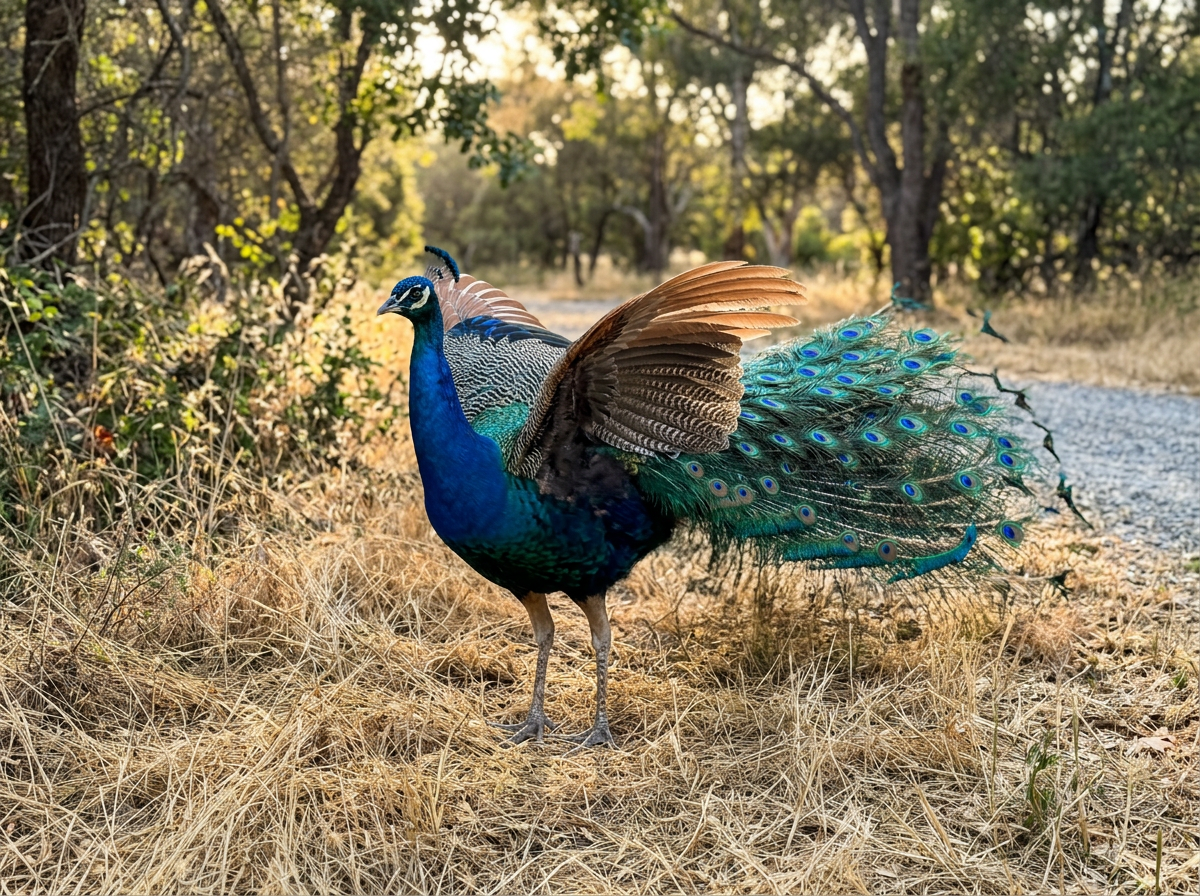
No, a peacock is not a bird of paradise. They are two completely different groups of birds, separated at the family level in scientific classification. Peacocks belong to the family Phasianidae (the pheasant family, order Galliformes), while birds of paradise belong to the family Paradisaeidae (order Passeriformes). That is not a minor distinction. It is roughly as different as comparing a chicken to a crow. The confusion is completely understandable, though, because both groups are famous for jaw-dropping plumage and elaborate courtship displays. Let's break this down properly so you leave with a clear, confident answer.
Is a Peacock a Bird of Paradise? Key Differences

Sarah Chen
22 Mar 2026
What 'bird of paradise' actually means
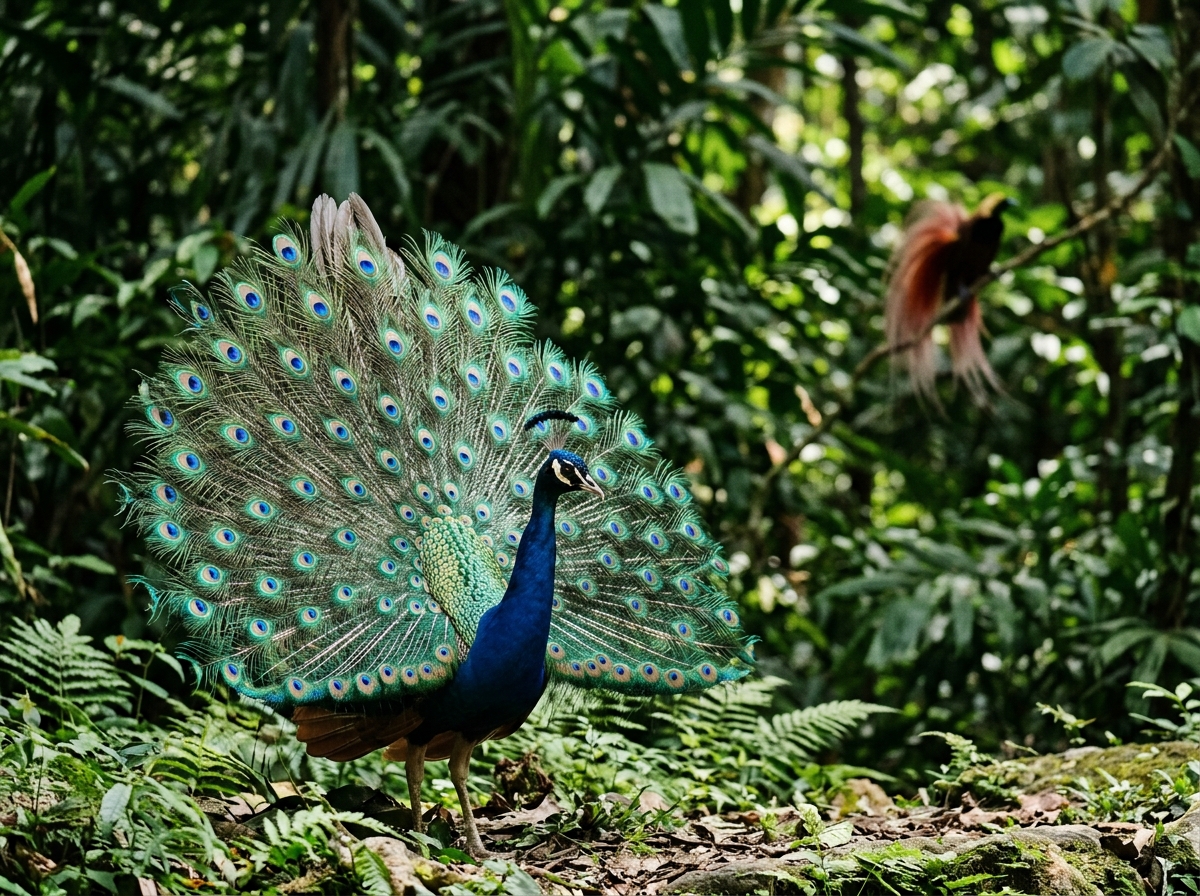
The term 'bird of paradise' refers specifically to members of the family Paradisaeidae, a group of more than 40 recognized species found primarily in New Guinea and nearby islands. They belong to the order Passeriformes, which is the same broad order that includes songbirds like crows, sparrows, and starlings. The Oxford University Museum of Natural History puts the count at over 40 recognized species within Paradisaeidae, and the Cornell Lab of Ornithology lists numerous genera within that family: Lycocorax, Manucodia, Paradigalla, Astrapia, Parotia, Ptiloris, Epimachus, Drepanornis, Semioptera, Lophorina, Paradisaea, Cicinnurus, and more. PBS has called them 'birds of the gods,' which gives you a sense of how seriously their plumage is taken.
So when someone says 'bird of paradise,' they are referring to a very specific biological family, not just any bird that looks flashy or tropical. The name has a precise scientific meaning, which is why it matters to get this right.
Where peacocks fit in bird classification
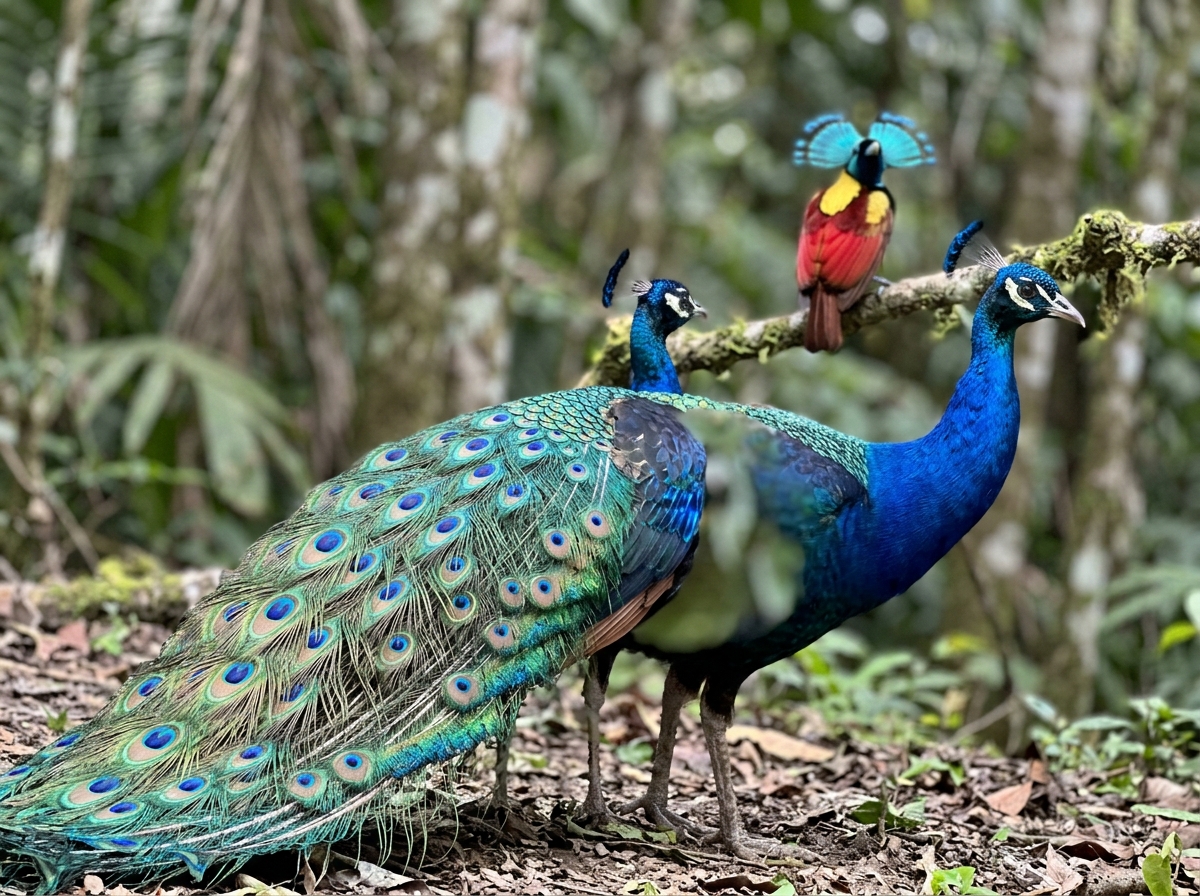
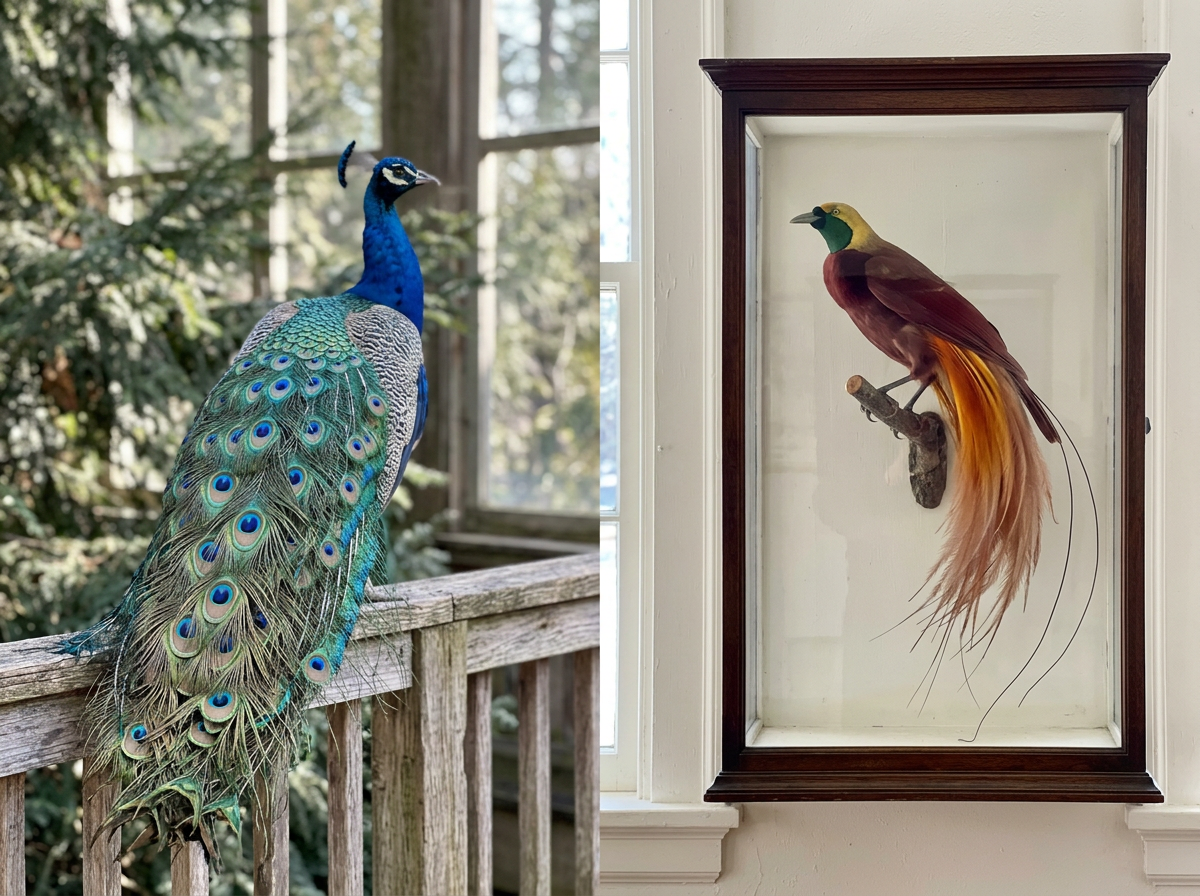
Peacocks are the males of the species known as peafowl. The full picture: 'peafowl' is the group name for three large bird species in the genera Pavo and Afropavo. Males are peacocks, females are peahens, and together they are all peafowl. The most familiar species is the common peafowl, Pavo cristatus, listed by the U.S. Fish & Wildlife Service under that scientific name.
Peafowl sit firmly in the family Phasianidae, order Galliformes. Phasianidae is the pheasant family, and it also includes pheasants, quail, turkeys, and chickens. That puts peacocks much closer to a barnyard chicken than to any bird of paradise. BirdGuides' IOC-based taxonomy confirms Pavo as a genus within Phasianidae, and Britannica makes the same call: peacocks are Phasianidae, order Galliformes, full stop. If you are curious about the broader question of how peacocks are classified as birds in general, that is a topic worth exploring on its own.
Similarities and common confusion
It is easy to see why people mix these two groups up. Both are famous for their stunning, almost unbelievable looks, and both are associated with elaborate male courtship displays. If you have only seen photos of each and not dug into the details, the mental category of 'absurdly beautiful tropical bird' can feel like it covers both.
- Both groups feature males with spectacularly colorful, ornate plumage that seems almost over-designed by nature.
- Both are known for elaborate male courtship displays designed to attract females.
- Both are associated with tropical or subtropical environments, which reinforces the mental grouping.
- The name 'bird of paradise' sounds like it could apply to any breathtaking bird, not a specific scientific family.
That last point is probably the biggest driver of confusion. 'Bird of paradise' sounds like a descriptive nickname, not a formal taxonomic label. But it is both, and when it refers to the family Paradisaeidae, it means something specific and exclusive. Peacocks do not qualify.
Key differences: courtship, appearance, and species family
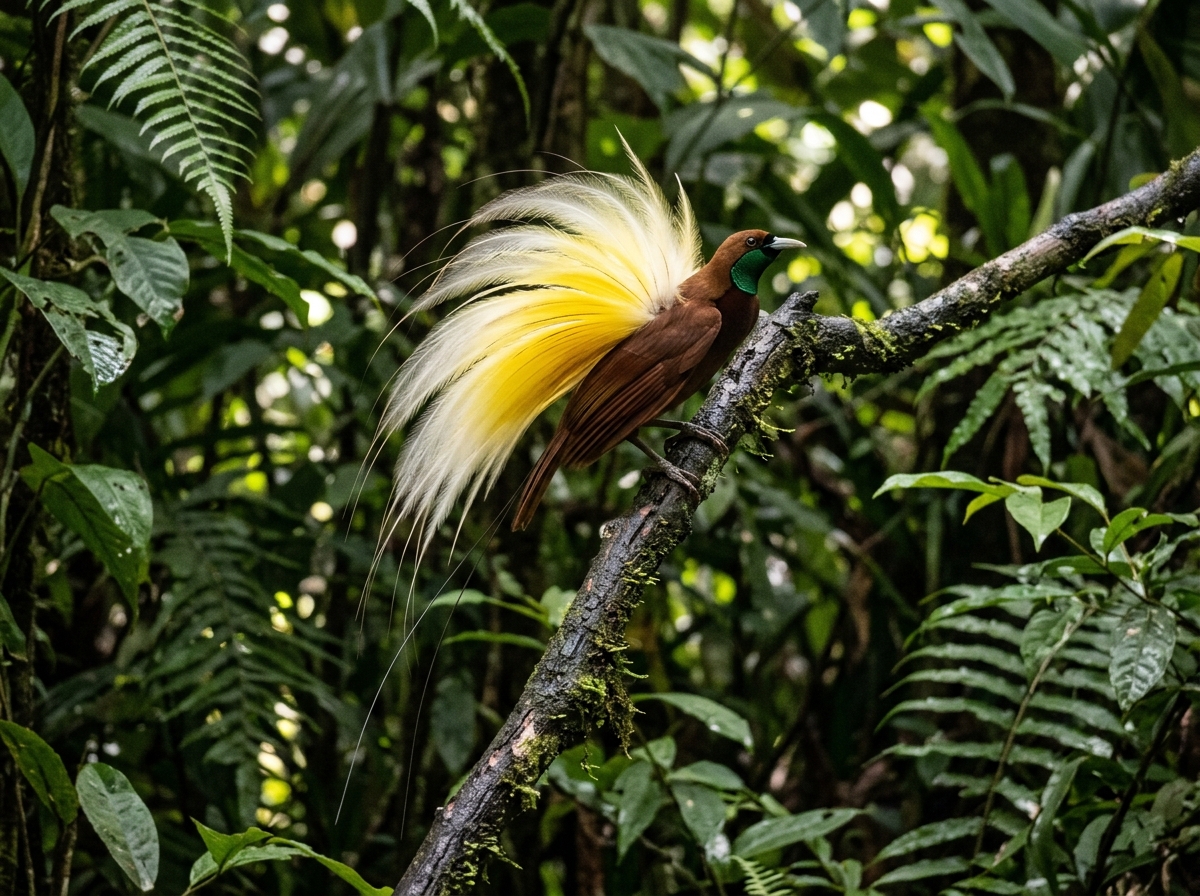
Once you know what to look for, peacocks and birds of paradise are not that hard to tell apart. The differences run deep, from their evolutionary family trees all the way down to how and where they perform their courtship displays.
| Feature | Peacock (Peafowl) | Bird of Paradise |
|---|---|---|
| Scientific family | Phasianidae | Paradisaeidae |
| Order | Galliformes | Passeriformes |
| Genera (examples) | Pavo, Afropavo | Paradisaea, Parotia, Astrapia, Lophorina, and many others |
| Number of species in group | 3 peafowl species | 40+ species |
| Native range | South Asia, Southeast Asia, Central Africa (Congo peacock) | New Guinea and surrounding islands, northeast Australia |
| Courtship display style | Male spreads and quivers the large 'train' feather fan in open ground | Males use leks (small individual display grounds), display poles, or ground courts depending on species |
| Signature visual feature | Enormous tail 'train' with iridescent eye-spot ocelli | Species-specific ornamental plumage: wires, plumes, shields, crests; varies widely by species |
| Typical habitat | Open lowland forests, forest edges, grasslands | Forest canopy and forest interiors; some species use ground courts |
The courtship display difference is worth dwelling on. A peacock spreads his famous 'train' into a giant arched fan and quivers it to attract a peahen, typically in a fairly open setting. Birds of paradise use a lekking system: each male defends a small display ground (a lek) and performs there to attract females. Some species, like the twelve-wired bird of paradise, call females to a specific display pole. Others, like Wilson's bird of paradise, use a carefully maintained ground court. The Field Museum notes that blue birds of paradise are mainly found displaying in the forest canopy. These are not variations on the same theme. They are genuinely different behavioral strategies.
How to identify: peacock vs bird-of-paradise traits
If you are looking at a bird and trying to figure out which group it belongs to, here are the practical cues to use. These are the things field birders and ornithologists actually check.
Peacock identification cues
- Large body, roughly turkey-sized or bigger, with a long neck and small head relative to the body.
- The male's 'train' (often called a tail, but technically it is elongated upper tail coverts) is the giveaway: it forms a massive fan when spread, covered in iridescent eye-spot patterns called ocelli.
- The train is spread and quivered during courtship, typically in open or semi-open ground.
- Found in South or Southeast Asia (Indian peafowl, green peafowl) or Central Africa (Congo peafowl, Afropavo congensis).
- If the bird looks like an oversized pheasant with an enormous decorative tail, you are almost certainly looking at a peafowl.
Bird-of-paradise identification cues
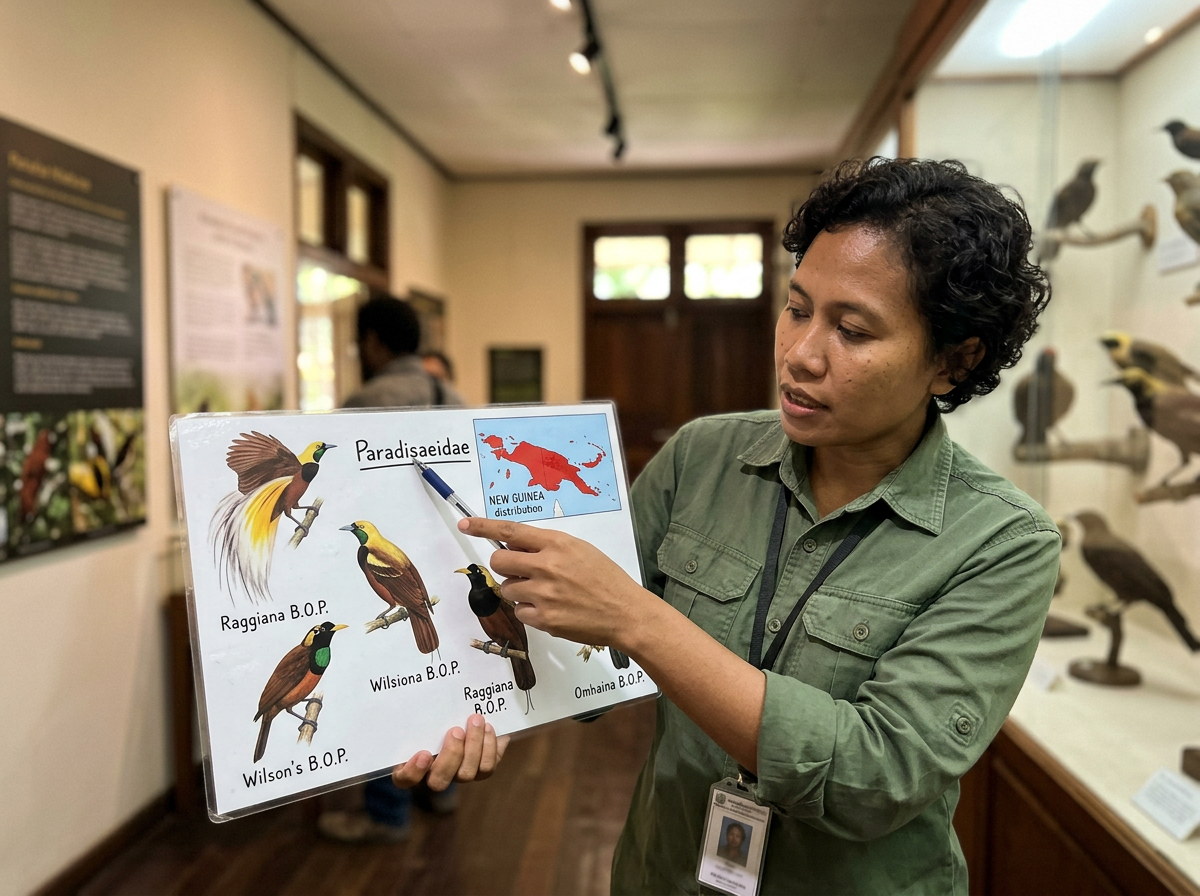
- Generally smaller than a peacock, though size varies across the 40+ species.
- Ornamental plumage is highly species-specific: some have long wire-like feather extensions, others have elaborate chest shields, head crests, or flank plumes in vivid blues, reds, yellows, and iridescent blacks.
- Found almost exclusively in New Guinea and immediately surrounding islands, with a few species in northeast Australia.
- Courtship happens at a defined lek, display pole, or ground court, often in or near forest.
- If the bird is in New Guinea or the surrounding region and has ornamental plumage unlike anything in the pheasant family, it is likely Paradisaeidae.
Geographic range alone does a lot of the work here. If you are in India or Sri Lanka and you see a spectacular large bird with a train fan, it is a peacock. If you are in New Guinea and you see a relatively smaller bird with bizarre wire feathers or a chest shield performing at a display ground, you are almost certainly looking at a bird of paradise. The two groups do not overlap in the wild.
Quick answer + decision checklist for today
Here is the direct answer one more time for clarity: a peacock is not a bird of paradise. Peacocks are peafowl, family Phasianidae, order Galliformes. Birds of paradise are family Paradisaeidae, order Passeriformes. They share no family-level classification and are not closely related.
Use this checklist the next time you need to sort out which bird you are dealing with:
- Check the family name: Is it Phasianidae (pheasant family)? That is a peacock/peafowl. Is it Paradisaeidae? That is a bird of paradise. These two family names settle the question immediately.
- Check the order: Galliformes = peafowl side. Passeriformes = bird-of-paradise side.
- Check the geographic range: South/Southeast Asia or Central Africa points to peafowl. New Guinea or northeast Australia points to Paradisaeidae.
- Check the display style: Giant fanned train with eye-spot ocelli = peacock. Species-specific ornamental plumage displayed at a lek, display pole, or forest court = bird of paradise.
- Check the size and body shape: Peacocks are large, turkey-like birds. Birds of paradise are generally smaller and more varied in body form.
- If you want to verify, look up the species on eBird or Cornell Lab's Birds of the World and check the family listed on the species page. The family name will confirm it instantly.
For next steps: if you want to go deeper on peacock classification, search for 'Pavo cristatus classification' or 'Phasianidae family members' on Cornell's All About Birds or eBird. For birds of paradise, search 'Paradisaeidae species list' on Cornell's Birds of the World or the IOC World Bird List, which maintains the official family index. You can also cross-reference on iNaturalist, which explicitly places Paradisaeidae in order Passeriformes, confirming the separation from peafowl at a glance. These are the most reliable, up-to-date sources for verifying bird classification right now.
FAQ
Are peacocks and birds of paradise related in any way?
They are not closely related, because they sit in different orders (peafowl in Galliformes, birds of paradise in Passeriformes) and different families. That means their last common relatives are much more distant than the “same bird type” people often assume from appearance alone.
If a bird looks like it has a “train,” does that automatically mean it is a peacock or a bird of paradise?
No. Several species outside these groups have showy or elongated plumage, and some display behaviors can look similar in photos. Use multiple cues together, especially location plus behavior (peacock arched fan with quivering, birds of paradise lek or pole displays) rather than relying on train-like feathers alone.
What should I check if I only have a photo and no location data?
Look for the display context and morphology cues. Peacock courtship is typically a large arched fan spread by a ground-dwelling male. Birds of paradise often show more specialized wire-like or shield-like features and perform from a consistent display spot such as a lek or a specific pole (varies by species).
Do male peafowl only show their train when a female is nearby?
Usually the display is geared toward attracting females rather than being a short “female nearby” reaction. In many settings, males display repeatedly in open areas, and the behavior can also be triggered by social competition with other males.
Can birds of paradise ever appear in areas where peacocks live?
Not in natural wild overlap, because the families have different native ranges (birds of paradise are primarily New Guinea and nearby islands). If you see one outside those regions, it is more likely a captive or transported bird, and you should not assume the label “bird of paradise” refers to any exotic-looking bird anywhere.
Is the term “bird of paradise” sometimes used loosely in pet trades or stories?
Yes. People may use it as a nickname for any striking tropical bird. For an accurate answer to “is a peacock a bird of paradise,” treat the phrase as taxonomic only when it is explicitly tied to the family Paradisaeidae.
Are peafowl the same as peacocks?
Peacocks are male peafowl. “Peafowl” is the broader group name that includes both sexes (peacocks and peahens) across three large species in the Pavo and Afropavo genera.
What is the quickest “field check” to avoid mixing them up?
Use this two-step rule: check order-level clues through behavior and look for the classic peacock arched fan train on the ground, or the lek/pole display system with specialized ornamental feathers in New Guinea habitat. If geography and display system do not match, reconsider your ID.
If I want to verify classification for a specific species, what should I search for?
Search by scientific name and family. For peafowl, start with names like “Pavo cristatus” and the family “Phasianidae.” For birds of paradise, search “Paradisaeidae” species lists, then verify the order “Passeriformes” so you do not rely on common names that can be misleading.
Next Article
Peacock Is a Bird or Not? Flightless, Flying, and Facts
Yes, peacock is a bird; explain flightless vs flying, limited hopping, roosting behavior, and how to spot it.