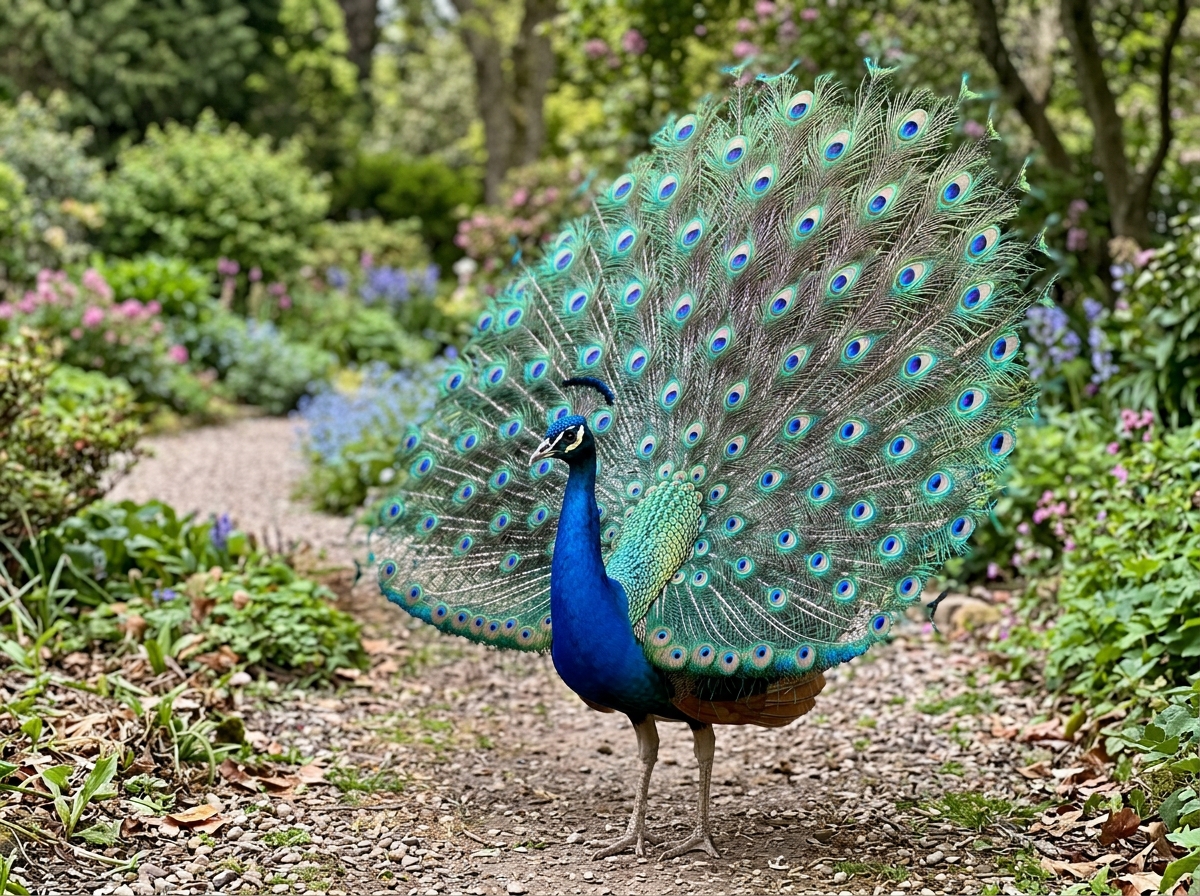
A peacock is a bird. Full stop. But here is the thing: it is also an animal, and both of those answers are correct at the same time. That is not a trick or a contradiction. It comes down to the difference between a broad biological category and a narrower one, and once you see how classification actually works, the confusion disappears instantly.
Is Peacock a Bird or Animal? Quick Clear Answer

Sarah Chen
22 Mar 2026
The direct answer: bird AND animal
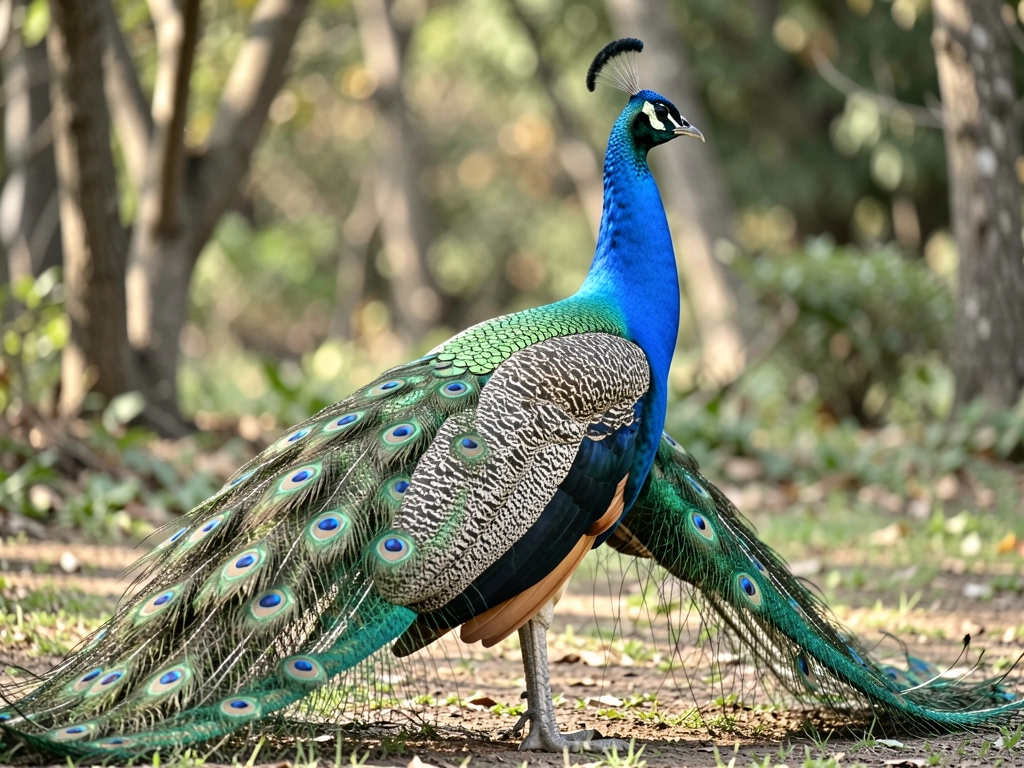
The Smithsonian Institution's taxonomic record for the Indian peafowl (the species most people picture when they say "peacock") places it under Kingdom Animalia, Class Aves, Order Galliformes, Family Phasianidae, Genus Pavo, Species cristatus. That single record tells you everything: peafowl belong to the animal kingdom, and within that kingdom they are classified as birds (Class Aves). So if someone asks "is it a bird or an animal?" the honest answer is that it is a bird, which makes it a specific kind of animal. Choosing between the two is a false choice.
In everyday conversation, most people mean "is it a bird, like a pigeon or an eagle, or is it something else, like a mammal or a reptile?" In that practical sense, the answer is simply: it is a bird.
What "animal" means vs. what "bird" means
"Animal" is the broad category. In biology, it refers to all members of the Kingdom Animalia, which includes mammals, reptiles, fish, amphibians, insects, and yes, birds. A dog is an animal. So is a salmon. So is a hummingbird. The word "animal" by itself does not tell you much about what kind of creature you are looking at.
“Bird” is a narrower category nested inside the animal kingdom. Encyclopaedia Britannica defines a bird as a warm-blooded, beaked vertebrate of Class Aves. What makes something a bird specifically? A few clear markers: feathers (no other living animal has them), a beak with no teeth, the ability to lay eggs, hollow bones adapted for flight (or descended from flighted ancestors), and warm-blooded metabolism. Penguins are birds even though they cannot fly. Ostriches are birds even though they are enormous. And peacocks are very much birds, even though their spectacular tail display can make them look almost alien.
The confusion often pops up because people use "animal" informally to mean a four-legged, furry creature, like a cat or a bear. That informal usage is understandable, but it is not how biology works. In biology, birds are animals. Always.
Where the peacock fits: game bird, pheasant family, or something else?
Peacocks (technically called peafowl, which covers both the male peacock and the female peahen) belong to the family Phasianidae, the pheasant family. That family sits inside Order Galliformes, the same order that includes chickens, turkeys, and quail. Encyclopaedia Britannica identifies the two most recognizable species as the blue or Indian peacock (Pavo cristatus) and the green or Javanese peacock (Pavo muticus).
So are they game birds? This is where things get context-dependent. "Game bird" is not a strict biological category. It is a regulatory and cultural label, and it varies by country and region. In the UK, the legal definition of "game" under shooting regulations refers specifically to pheasant, partridge, grouse, and a handful of other species. Peafowl are not on that official list. In the United States, the U.S. Fish and Wildlife Service does include peafowl (Common Blue Peacock, Pavo cristatus) in certain species importation frameworks under a game-bird-related classification, but Texas Parks and Wildlife, for example, explicitly lists peafowl among birds that do NOT require a commercial game bird breeder's license, treating them differently from regulated game birds like quail and pheasant.
The short version: peacocks share the same biological order (Galliformes) as many birds commonly called game birds, so you will sometimes see them loosely grouped that way. But in most formal regulatory and hunting frameworks, peafowl sit outside the core game bird category. They are best described simply as members of the pheasant family, or more precisely, as peafowl.
| Label | Does it apply to peacocks? | Why or why not |
|---|---|---|
| Animal | Yes | All birds belong to Kingdom Animalia |
| Bird | Yes | Classified under Class Aves, the defining biological group for birds |
| Pheasant family member | Yes | Family Phasianidae, same as pheasants and turkeys |
| Game bird (regulatory) | Depends on the region | Defined by local/national law; peafowl are excluded from most formal game bird lists |
| Bird of prey | No | Peacocks are herbivores and omnivores, not raptors |
| Bird of paradise | No | Birds of paradise are a separate family (Paradisaeidae) native to New Guinea |
| Mammal | No | Peacocks have feathers, lay eggs, and belong to Class Aves, not Class Mammalia |
Quick checks to confirm: yes, that is definitely a bird
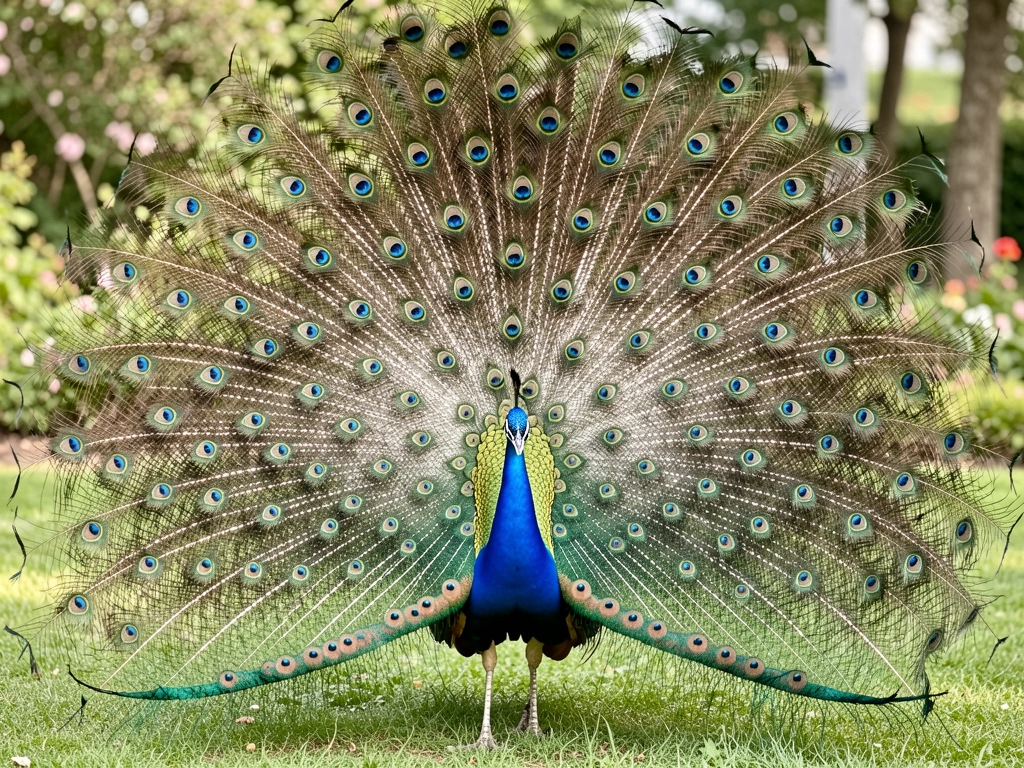
If you ever find yourself in a situation where someone genuinely questions whether a peacock is a bird, here are a few concrete, observable cues that settle it immediately.
Appearance
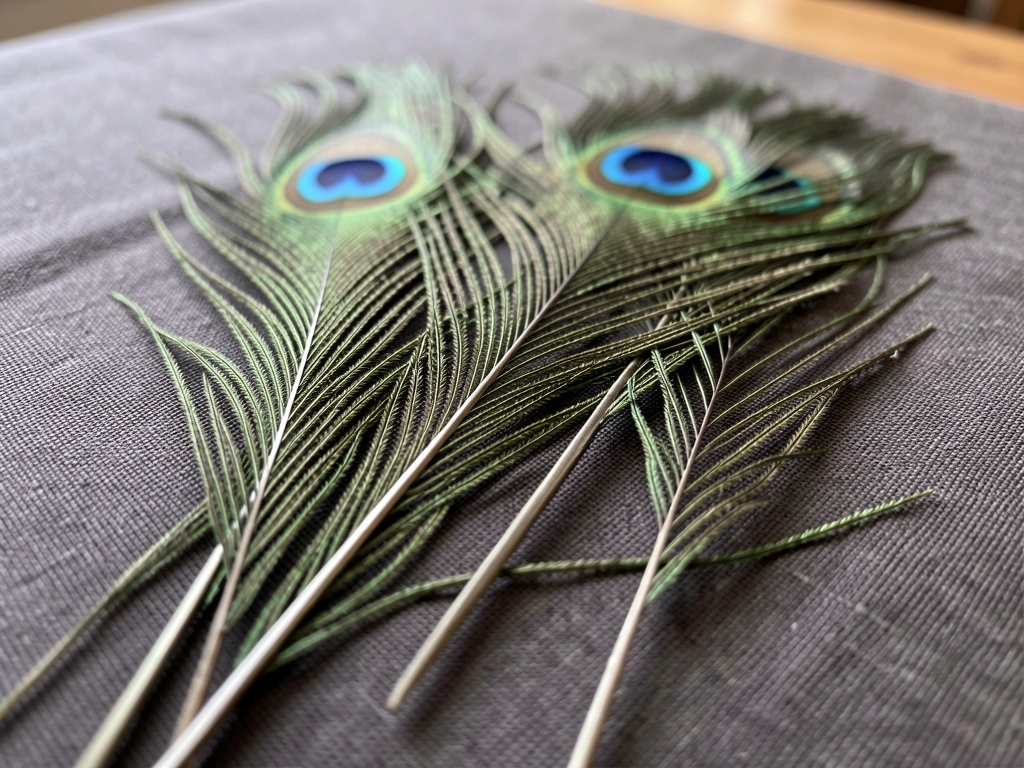
The most distinctive feature of a male peacock is his train, the sweeping iridescent display that National Geographic notes is more than 60 percent of his total body length. That train is not actually the tail. It is formed from elongated upper tail coverts, specialized feathers that only birds have. Each feather carries the iconic "eye" markings used in courtship displays. Feathers alone confirm this is a bird. No other animal alive has feathers.
Behavior
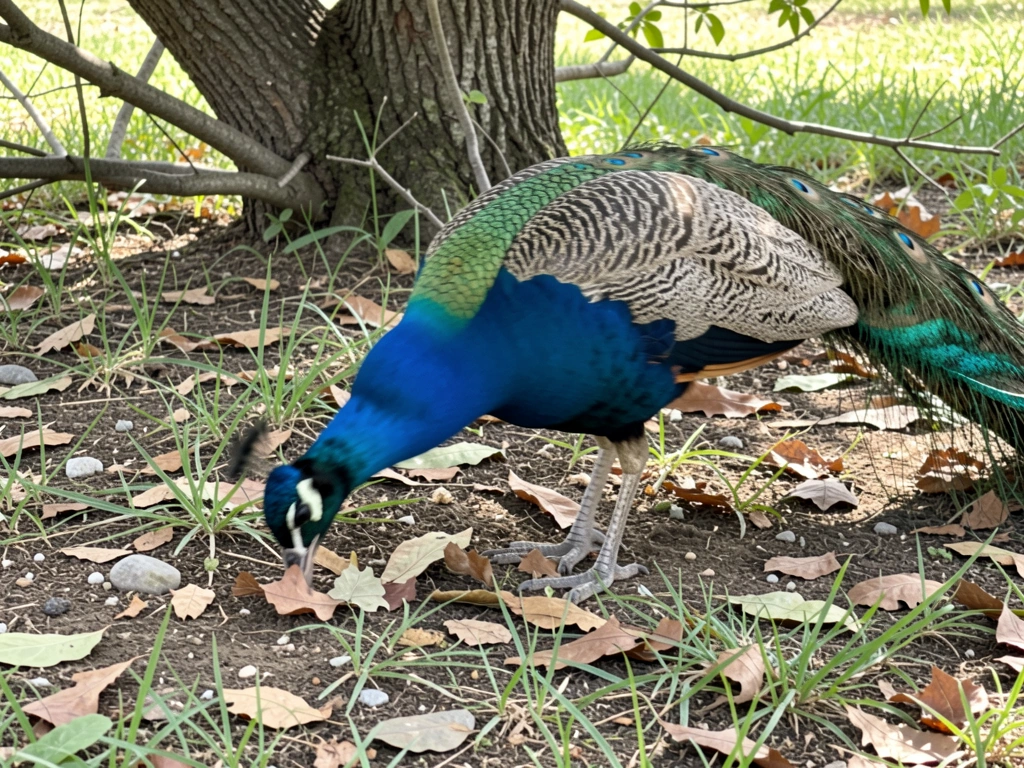
Peafowl are diurnal, meaning they are active during the day, foraging on the ground for plants, insects, and small creatures. At night they roost in trees, exactly as you would expect from a bird. During courtship, the male raises and vibrates his train in a visual display, and researchers at Audubon have noted that this display also produces low-frequency sound and vibration. The female, called a peahen, lays eggs, which is another definitive bird behavior.
Habitat and range
Wild Indian peafowl (Pavo cristatus) are native to South Asia, particularly the Indian subcontinent. Green peafowl (Pavo muticus) are native to Southeast Asia. Both species live in forests and open woodland areas, roosting in trees and foraging on the ground during the day. This ground-feeding, tree-roosting lifestyle is typical of birds in the Galliformes order, the same group as turkeys and pheasants.
What to call them and why the wording matters
Getting the terminology right is more useful than it sounds, especially if you are describing these birds to someone, writing about them, or answering a quiz question. Here is the standard that National Geographic, PBS Nature, and the Smithsonian all agree on:
- Peacock: the male bird specifically
- Peahen: the female bird specifically
- Peafowl: the collective term for the species, covering both males and females
- Pavo cristatus: the scientific name for the Indian or blue peafowl, the most familiar species
In everyday conversation, calling a peahen a "peacock" is a very common and forgivable mistake. Most people picture the male's dramatic train when they hear the word, so the informal use of "peacock" to mean any peafowl is widely understood. But if you are writing something formal, working in wildlife management, or just want to be precise, use "peahen" for the female and "peafowl" when referring to the group.
Why does it matter whether you say "bird" or "animal" when describing a peacock? Mostly for clarity. If someone asks you "what kind of animal is a peacock?" the most useful answer is "it is a a bird, specifically a member of the pheasant family." Saying "it is an animal" is technically correct but completely unhelpful. Saying "it is a bird" gives the listener the right mental category instantly. And if the question is on a school worksheet or a trivia game asking "bird or animal," the expected answer is always "bird," because that is the more specific and informative classification.
The bottom line is this: every bird is an animal, but not every animal is a bird. Peacocks sit firmly in both categories, with "bird" being the one that actually tells you something useful about what they are. When in doubt, anchor your answer in the science: Class Aves, family Phasianidae, and one of the most visually striking birds on the planet.
FAQ
If every bird is an animal, why do people still ask, “Is a peacock a bird or animal?”
It usually comes from “animal” being used casually to mean mammals. In biology, “animal” is the whole Kingdom Animalia, and “bird” is a specific class within it, so the more informative answer for peafowl is “bird.”
Are peahens also birds, or is “peacock” only the male?
Peahens are birds too. “Peacock” is commonly used for males, but the scientific and group term is peafowl, which includes both sexes (Pavo cristatus for Indian peafowl and Pavo muticus for green peafowl).
Can peafowl be called “chickens” since they are in the same order as chickens?
Only loosely. They are both in the order Galliformes, but chickens are in a different family and are not the same type of bird. For precision, say peafowl or the pheasant family (Phasianidae).
Is a peacock the same thing as a turkey, pheasant, or quail?
No. They share broad ancestry at the order level (Galliformes), but they differ by family and species. Peafowl belong to Phasianidae, while turkeys and quail are in different families.
If someone says “game bird,” does that automatically include peafowl everywhere?
No. “Game bird” is a regulatory and cultural label that varies by country and jurisdiction. Some frameworks treat peafowl differently from regulated game birds like pheasant or quail, so you must check the local rules for hunting or possession.
What is the fastest way to confirm in real life that peafowl are birds?
Look for feathers. Feathers plus a beak and the typical bird behavior of egg-laying and daytime foraging will confirm it quickly, even if the tail display is what grabbed your attention first.
Do peafowl have a “tail” that makes them birds, or is the display something else?
The striking fan-like display comes from elongated specialized feathers (upper tail coverts), not a true tail the way many people imagine. The key point is still that those display feathers are bird feathers, which is decisive.
If a quiz asks “bird or animal,” is “bird” always the correct expected answer?
Yes, in that format “bird” is the intended specific classification. “Animal” is technically correct in a broad sense but is less informative, and quizzes typically reward the more specific category.
Next Article
Peacock Is a Bird: Why They Look So Beautiful
Yes, a peacock is a bird. Learn why its iridescent plumage and courtship display feel so beautiful, not objectively rank